 Sofia Wells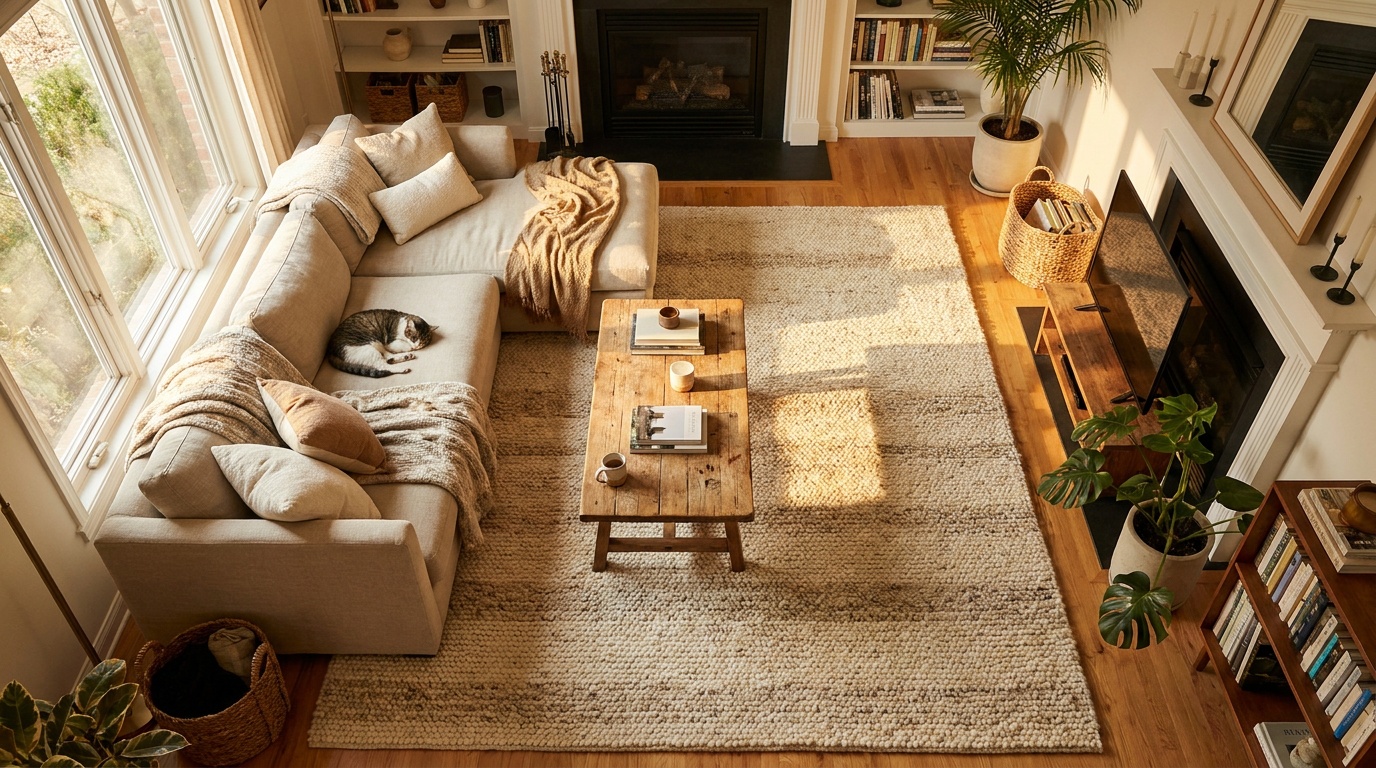
Area Rug Size Guide: How to Choose the Right Dimensions by Room
Reading time: 12 minutes
Ever stood in a furniture store, staring at a beautiful rug, completely unsure whether it would look like a postage stamp or a wall-to-wall carpet in your living room? You’re not alone. Choosing the wrong rug size is one of the most common — and costly — interior design mistakes homeowners make in 2026. A rug that’s too small makes a room feel disconnected and awkward; one that’s too large overwhelms the space and kills its visual flow.
Here’s the straight talk: getting your rug dimensions right isn’t about following rigid rules — it’s about understanding proportion, purpose, and the specific personality of each room. Whether you’re furnishing a compact urban apartment or a sprawling open-plan living area, this guide will walk you through the exact logic and measurements you need to make confident, room-by-room decisions.
Table of Contents
- Why Rug Size Matters More Than You Think
- Understanding Standard Rug Sizes in 2026
- Living Room Rug Sizing: The Anchor Principle
- Bedroom Rug Sizing: Comfort Underfoot
- Dining Room Rug Sizing: Function First
- Kitchen, Hallway, and Home Office Rugs
- 3 Common Sizing Mistakes and How to Fix Them
- Quick Comparison: Room-by-Room Size Guide
- Frequently Asked Questions
- Your Perfect Rug Roadmap: Next Steps
Why Rug Size Matters More Than You Think
Interior designers consistently rank rug sizing as the single most impactful — and most misunderstood — element of room design. According to a 2025 survey by the American Society of Interior Designers (ASID), 68% of homeowners who reported dissatisfaction with their living spaces cited furniture arrangement and rug proportion as key contributors to that feeling, even when they couldn’t articulate exactly why.
Think about the last time you walked into a beautifully styled room — in a hotel lobby, a showroom, or a friend’s home — and immediately felt at ease. Chances are, the rug was doing a lot of heavy lifting. It was grounding the furniture, defining the zone, and giving your eye a visual resting place. That’s the invisible power of a correctly sized rug.
Conversely, picture a generous sectional sofa floating on a tiny 5×7 rug, like a cruise ship anchored to a life preserver. The effect is jarring, even if every other element in the room is perfect. Size isn’t just aesthetic — it’s architectural.
“A rug is the foundation of a room, not an accessory. When the foundation is the wrong size, everything built on top of it feels unstable.” — Kelly Wearstler, interior designer, 2025 Architectural Digest interview
Understanding Standard Rug Sizes in 2026
Before diving into room-specific guidance, let’s establish a shared vocabulary. In 2026, the most commonly available rug sizes in both retail and online markets are:
- 2×3 ft — Entry mats, small accent pieces
- 3×5 ft — Small accent rugs, bathrooms, tight hallways
- 4×6 ft — Small rooms, reading nooks, children’s spaces
- 5×8 ft — Medium living rooms, guest bedrooms
- 6×9 ft — Mid-sized living rooms, dining rooms with small tables
- 8×10 ft — The most popular all-purpose size; works in most standard rooms
- 9×12 ft — Large living rooms, open-plan spaces, master bedrooms
- 10×14 ft and beyond — Grand rooms, formal dining areas, commercial-style spaces
Custom sizing has also surged in popularity. A 2025 report by the Floor Covering Industry (FCI) noted that custom rug orders grew by 34% between 2023 and 2025, driven largely by the rise of open-plan home layouts and the demand for exact-fit solutions in irregularly shaped rooms.
Pro Tip: Before shopping, always measure your room and tape out potential rug dimensions on your floor with painter’s tape. Live with the taped outline for a day or two. This simple hack has saved thousands of homeowners from expensive returns.
Living Room Rug Sizing: The Anchor Principle
The living room is where rug-sizing anxiety peaks — and for good reason. It’s typically the most visible, most used, and most socially scrutinized space in a home. The golden rule here is what designers call The Anchor Principle: your rug should anchor your primary seating arrangement, not just fill floor space.
The Three Classic Living Room Configurations
There are three broadly accepted approaches to placing a rug in a living room, each suited to different room sizes and furniture arrangements:
1. All Legs On — All furniture legs sit entirely on the rug. This works best in smaller rooms where you want the seating area to feel intimate and unified. Typically requires at least a 9×12 ft rug.
2. Front Legs On — Only the front legs of sofas and chairs rest on the rug. This is the most popular approach in 2026, striking a balance between connection and openness. An 8×10 ft rug works beautifully here in most standard-sized living rooms.
3. All Legs Off (Floating Rug) — The rug sits entirely beneath a coffee table, with no furniture legs touching it. This approach is acceptable only in very large rooms where the rug is used as a purely decorative focal point.
Real-World Example: The Open-Plan Dilemma
Consider Jessica and Marco, a couple who renovated their Brooklyn townhouse in 2025. Their open-plan ground floor combined a living area, dining zone, and kitchen — a common layout in modern urban homes. Their instinct was to buy a single large rug to “tie everything together.” Their designer redirected them: instead, they used a 9×12 ft rug beneath the living seating arrangement and a separate 6×9 ft rug under the dining table. The result? Two clearly defined zones that felt intentional and spacious rather than one overwhelming carpet sea.
The key insight here: in open-plan spaces, multiple appropriately-sized rugs outperform one oversized rug every time.
For most standard North American living rooms (12×15 ft to 15×20 ft), the recommended rug sizes are:
- Small living room (under 12×14 ft): 5×8 ft or 6×9 ft
- Medium living room (12×16 ft to 14×18 ft): 8×10 ft
- Large living room (over 16×20 ft): 9×12 ft or 10×14 ft
Bedroom Rug Sizing: Comfort Underfoot
The primary function of a bedroom rug is sensory: when your feet hit the floor in the morning, you want warmth and softness, not cold hardwood. But sizing for the bedroom involves a specific calculation that trips up even experienced decorators.
The Bed-to-Rug Relationship
The most important rule in bedroom rug sizing is this: the rug should extend at least 18–24 inches beyond each side of the bed that will be stepped onto. This creates that crucial soft-landing zone.
Here’s a practical breakdown by bed size:
Twin or Full Bed: A 5×8 ft rug centered under the bed (with 2/3 of the rug visible at the foot) or placed at the foot of the bed works perfectly.
Queen Bed: An 8×10 ft rug is the standard recommendation. Position it so the rug extends 18–24 inches on both sides and about 18 inches at the foot. The rug should tuck approximately 12 inches under the bed frame.
King Bed: Step up to a 9×12 ft rug. A king bed is roughly 76 inches wide, so an 8×10 barely provides adequate side clearance. The 9×12 gives you generous room on all exposed sides.
Alternative Approach — Runner Trio: If a large area rug isn’t in the budget, three runners (one on each side and one at the foot) can achieve the same sensory effect at a fraction of the cost. In 2026, this approach has gained significant traction in boutique hotel-style bedroom design.
A note on placement: always center the rug with the bed as your reference point, not the room’s center. Your eye follows the bed, not the architecture.
Dining Room Rug Sizing: Function First
The dining room is where function overrides aesthetics more than in any other space. Get the sizing wrong here and you’ll spend every dinner frustrated as chair legs catch the rug edge — a genuinely annoying problem that thousands of homeowners discover only after installation.
The non-negotiable rule for dining room rugs: the rug must extend at least 24 inches beyond all sides of the dining table. This ensures that chairs remain fully on the rug even when pulled out for seating.
Here’s the math made simple:
- Measure your dining table length and width
- Add 48 inches to each dimension (24 inches per side)
- The result is your minimum rug size
For example: A standard 36×72 inch (3×6 ft) dining table requires a minimum rug of 7×10 ft — which rounds up practically to an 8×10 ft rug. A larger 42×84 inch (3.5×7 ft) table needs at least an 8×12 ft or 9×12 ft rug.
Real-World Example: The Hendersons, a family of five in Austin, Texas, purchased a gorgeous hand-knotted wool rug in 2025 for their dining room — in a 6×9 ft size. Their dining table was 36×78 inches. Within a week, every family dinner involved the familiar scrape-and-catch as chairs snagged the rug edge. They ended up returning the rug (a costly process) and upgrading to an 8×10 ft. The lesson? Measure twice, buy once.
Shape Matters Too: If you have a round dining table, a round rug is a visually cohesive choice, but only if it’s large enough. For a 48-inch round table, you need at least an 8-foot diameter round rug. For a 60-inch round table, go to 9 or 10 feet in diameter.
Kitchen, Hallway, and Home Office Rugs
These secondary spaces are often overlooked in rug-sizing discussions, but they present their own unique challenges and opportunities.
Kitchen Rugs: In kitchens, rugs serve a purely functional purpose: fatigue relief and slip prevention. The most common kitchen rug placements are in front of the sink, the stove, or along a kitchen island. Runner rugs (2×6 ft to 2.5×8 ft) are the workhorse choice here. In 2026, washable kitchen rugs have become the dominant category, with brands like Ruggable and Lorena Canals reporting that kitchen rugs now account for 28% of their total sales volume, up from 19% in 2023.
Hallway Rugs: The rule for hallways is proportion: the runner should leave 4–6 inches of floor visible on each side. In a 36-inch-wide hallway, a 24-inch-wide runner is ideal. In terms of length, the runner should run to within 12–18 inches of each end wall, creating a visual frame. Common hallway runner sizes are 2×8 ft, 2.5×10 ft, and 3×12 ft.
Home Office Rugs: With remote and hybrid work remaining dominant in 2026, the home office rug has become a category of its own. The primary challenge: desk chair wheels on rug fibers. Flat-weave rugs or low-pile options work best. For a standard desk setup, a 5×8 ft rug that allows the chair to roll freely while keeping the desk legs anchored is the sweet spot. If your desk chair sits on a hard floor, a clear polycarbonate chair mat on top of the rug preserves both comfort and mobility.
3 Common Sizing Mistakes and How to Fix Them
Even armed with the right measurements, people fall into predictable traps. Here are the three most common ones — and how to navigate around them:
Mistake #1: Buying Too Small Because It Looks Fine in the Store
Showroom floors are enormous. A rug that looks substantial in a 3,000 sq ft showroom will look like a bath mat in your 200 sq ft bedroom. Fix: Always use the painter’s tape method at home before purchasing. Or use a free online room visualizer tool — IKEA, Wayfair, and several independent apps updated their AR room-planning features significantly in 2025 to allow precise rug dimension previews.
Mistake #2: Ignoring the Rug Pad Factor
A rug pad adds approximately 0.5–1 inch of height and can shift your visual proportions slightly. More importantly, rug pads are typically cut 1–2 inches smaller than the rug itself. Fix: Always order your rug pad at the same time as your rug, and factor in the slight size reduction to ensure adequate coverage under your furniture anchor points.
Mistake #3: Choosing Shape Before Size
Falling in love with a round rug and then forcing it to work in a rectangular room is a classic pitfall. Fix: Determine your ideal dimensions first, then decide on shape. Round rugs work best in square rooms or under round furniture (dining tables, accent chairs in a reading nook). Rectangular rugs are more versatile in elongated spaces.
Quick Comparison: Room-by-Room Size Guide
| Room | Small Space | Medium Space | Large Space | Key Rule |
|---|---|---|---|---|
| Living Room | 5×8 ft | 8×10 ft | 9×12 ft | Front legs on rug minimum |
| Bedroom (Queen) | 5×8 ft | 8×10 ft | 9×12 ft | 18–24 in beyond bed sides |
| Dining Room | 6×9 ft | 8×10 ft | 9×12 ft+ | 24 in beyond all table edges |
| Kitchen | 2×3 ft mat | 2×6 ft runner | 2.5×8 ft runner | Washable, low-pile priority |
| Home Office | 4×6 ft | 5×8 ft | 6×9 ft | Chair rolls freely on surface |
2026 Most Popular Rug Sizes by Purchase Volume
Market Share by Rug Size (2026 Retail Data)
36%
25%
18%
13%
8%
Source: Floor Covering Industry (FCI) Annual Report, 2026
Frequently Asked Questions
Can a rug be too big for a room?
Yes, absolutely. A rug that extends to within just a few inches of every wall essentially becomes wall-to-wall carpeting and eliminates the grounding effect that makes a rug valuable. The ideal guideline is to leave at least 12–18 inches of bare floor visible between the rug edge and the wall on all sides. This creates a visual border that makes both the rug and the room appear more intentional. In very large rooms (over 20 feet in any dimension), you can extend that bare floor border to 24 inches without losing visual coherence. Going too large also creates a practical issue: oversized rugs are harder to clean, more expensive to replace, and limit your flexibility when rearranging furniture.
What rug size works best if I can’t move my furniture to measure underneath it?
This is a common real-world constraint. The best approach is to work from the outside dimensions of your furniture arrangement rather than the floor. Measure the total footprint of your seating group (sofa, chairs, coffee table combined) as a rectangle. For the “front legs on” configuration, subtract about 18 inches from the depth measurement (since only the front legs need to be on the rug), and add 12–18 inches to the width on each side to ensure the rug extends beyond the furniture edges. This calculation gives you a working minimum size. When in doubt, size up rather than down — a slightly too-large rug is far more forgiving than one that’s too small.
Does rug shape matter as much as size?
Shape matters, but only after size is correctly determined. The cardinal rule is: get the size right first, then choose the shape. Rectangular rugs are the most versatile and suit the majority of room configurations. Round rugs work beautifully in square rooms, under round dining tables, in entryways, and in kids’ rooms where a soft circular element adds playful geometry. Oval rugs occupy a middle ground — slightly softer than rectangular but more directional than round — and work well in narrow dining rooms or elongated spaces. Irregular or hide-shaped rugs are purely decorative and should always be layered over a larger foundational rug rather than used as primary anchor pieces.
Your Perfect Rug Roadmap: Next Steps
You now have the framework. Here’s how to put it into action immediately:
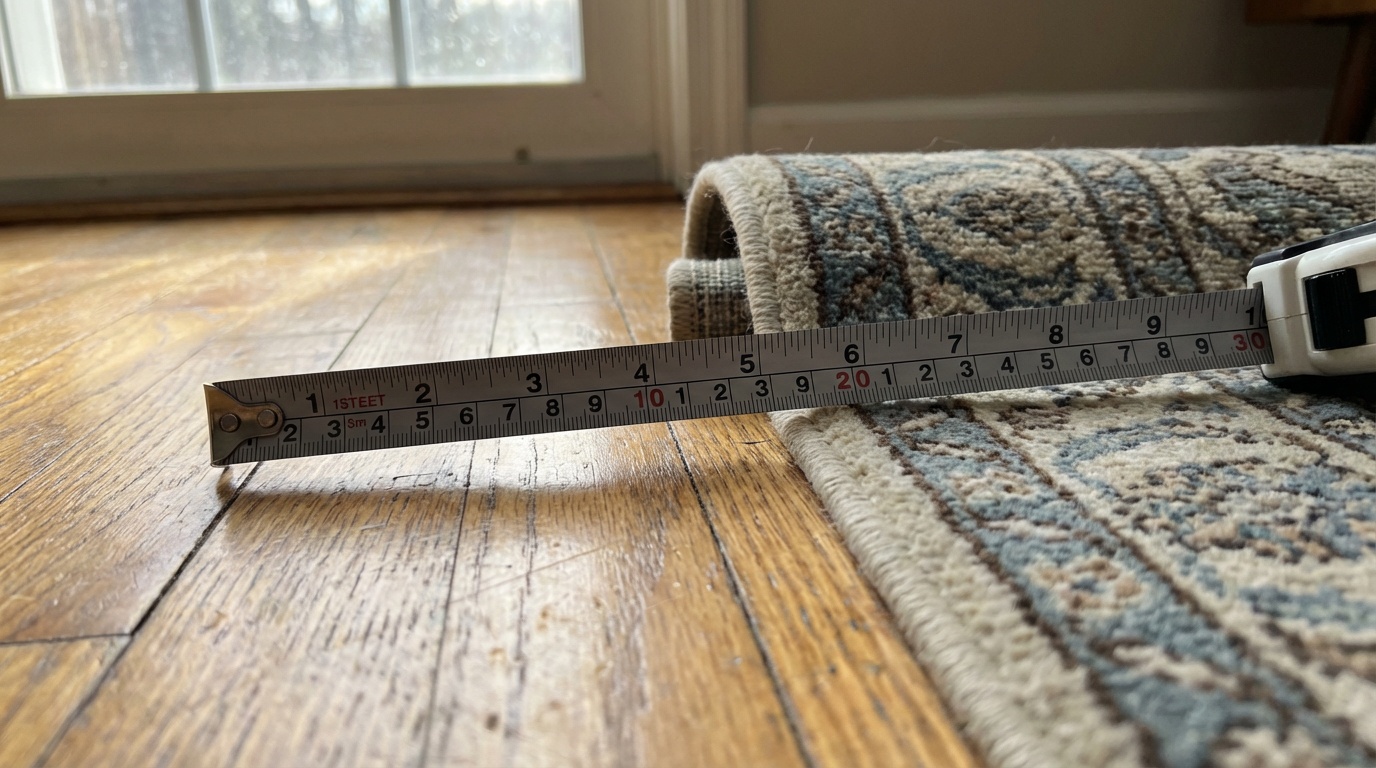
- Step 1 — Measure Every Room Intentionally. Grab a tape measure today and note the room dimensions AND the furniture footprint dimensions for every space where you’re considering a rug. Write them down. This single step eliminates 80% of sizing errors.
- Step 2 — Tape It Out Before You Buy. Use painter’s tape to mock up your intended rug size on the floor. Live with it for 48 hours. Walk around it, sit in your furniture, see how it flows with the room’s traffic patterns.
- Step 3 — Apply the Room-Specific Rule. Living room? Front legs on. Dining room? 24 inches beyond the table on all sides. Bedroom? 18–24 inches of rug beyond each sleeping side. These rules aren’t arbitrary — they’re the product of decades of collective design wisdom.
- Step 4 — Budget for a Quality Rug Pad. A good rug pad extends the life of your rug by 30–50%, prevents dangerous slipping, and adds cushioning that makes even a mid-range rug feel luxurious. It’s always worth the additional investment.
- Step 5 — Embrace Iteration. In 2026, with flexible return policies at most major rug retailers and AR visualization tools available on your smartphone, there’s less risk than ever in experimenting. If the first rug isn’t quite right, return it and adjust.
As open-plan living, multi-functional home offices, and personalized interior aesthetics continue to shape how we design our homes in 2026 and beyond, the ability to size rugs with intention becomes an increasingly powerful skill — one that transforms ordinary rooms into spaces that genuinely reflect how you live and feel.
Here’s the question worth sitting with: Which room in your home has been feeling “off” for reasons you couldn’t quite name? There’s a good chance the right rug — in exactly the right size — is the missing piece you’ve been looking for all along.
Article reviewed by Tom Schuster, Roofing & Water Damage Rehabilitation Expert, on May 4, 2026