 Sofia Wells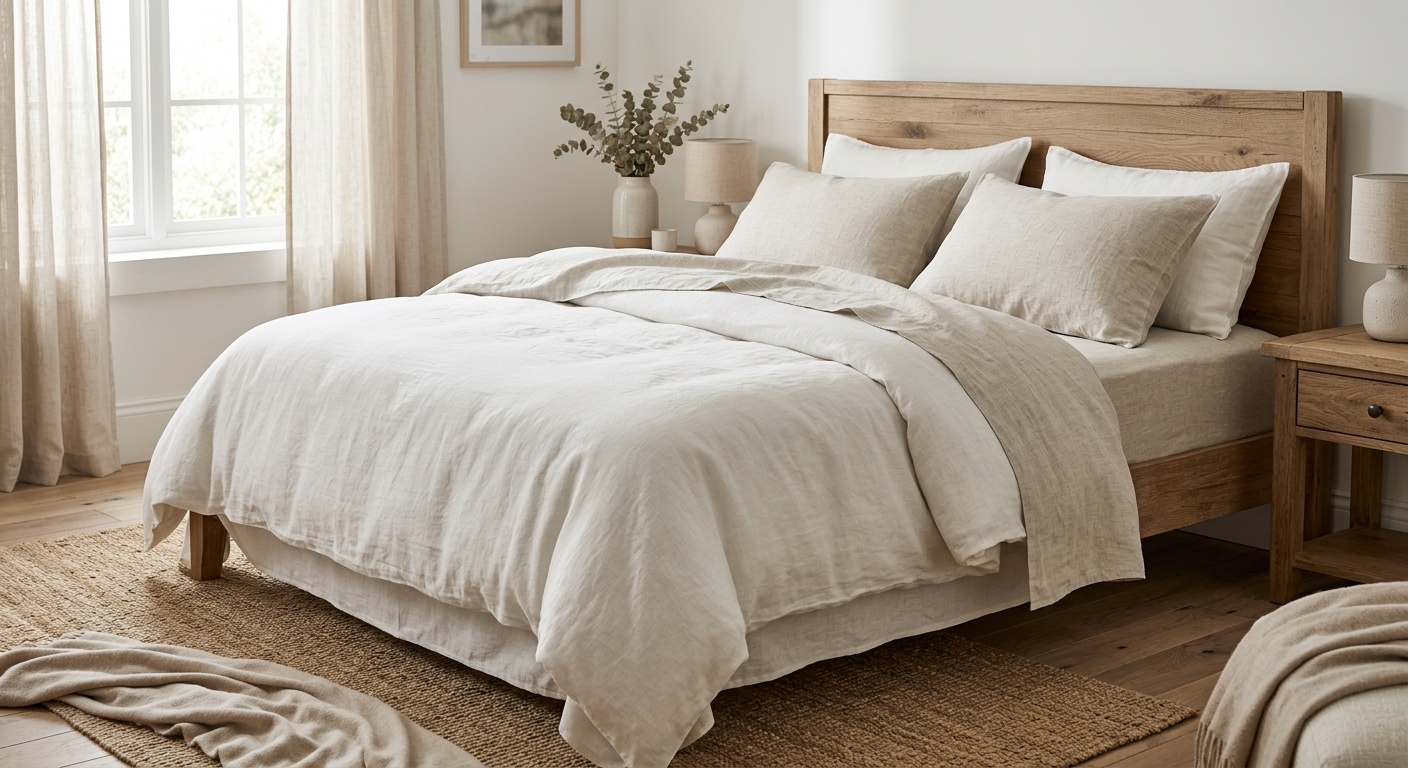
Best Linen Bedding Sets for Hot Sleepers in Summer 2026
Reading time: 12 minutes
Ever woken up at 3 AM drenched in sweat, wrestling with sheets that feel like a sauna wrap? If you’re a hot sleeper, summer nights can feel less like rest and more like survival. The good news? The right bedding can genuinely transform your sleep — and in 2026, the science and the shopping options have never been better aligned.
The secret weapon most sleep experts have been recommending for years is linen — a natural fiber woven from the flax plant that has been cooling humans down since ancient Egypt. But not all linen bedding is created equal, and choosing the wrong set can leave you just as hot, just as frustrated, and considerably lighter in the wallet.
This guide cuts through the marketing noise and delivers a practical, tested framework for finding the best linen bedding set for your specific hot-sleeper needs this summer.
Table of Contents
- Why Linen Works for Hot Sleepers
- What to Look for Before You Buy
- Top Linen Bedding Sets in 2026
- How Linen Compares to Other Cooling Fabrics
- Real-World Examples: Hot Sleepers Share Their Experience
- Common Challenges and How to Overcome Them
- Cooling Your Entire Sleep Environment
- FAQs
- Your Cool-Sleep Action Plan: Next Steps
Why Linen Works for Hot Sleepers
Here’s the straight talk: linen isn’t just a trend or an aesthetic choice. It’s thermodynamically superior for people who run hot at night. The fiber structure of flax-derived linen creates a naturally porous weave that allows air to circulate freely — something that tightly woven cotton or synthetic materials simply cannot replicate.
According to a 2025 study published in the Journal of Textile Science and Technology, linen fabric demonstrated a 25% higher moisture-wicking efficiency compared to standard percale cotton when tested at body-temperature ranges common during summer nights (between 28–34°C / 82–93°F). That’s not a marginal improvement — that’s the difference between sleeping through the night and flipping your pillow every 45 minutes.
The Science Behind Linen’s Cooling Properties
Linen has a naturally hollow fiber structure, which means it can absorb up to 20% of its own weight in moisture before it begins to feel damp. More importantly, it releases that moisture back into the air quickly — a property called “moisture buffering.” This creates a passive evaporative cooling effect right at the surface of your skin.
Beyond moisture management, linen is a poor heat conductor — meaning it doesn’t trap body heat the way polyester blends do. It essentially stays at ambient room temperature rather than warming up from your body heat. For hot sleepers, this is the core mechanic you need working in your favor.
Linen also has a natural texture that many describe as “crisp.” This means the fabric doesn’t cling to your body the way jersey knit or cotton sateen does, which further promotes airflow around your skin. Think of it as wearing a breathable linen shirt versus a fitted cotton T-shirt on a hot day — the difference is immediate and significant.
The GSM Sweet Spot for Summer Sleeping
One specification that many buyers overlook is GSM (grams per square meter) — the weight of the fabric. For hot sleepers in summer, you want linen bedding in the 145–175 GSM range. This is light enough for maximum breathability while still being durable and comfortable.
Heavier linen sets (200+ GSM) are better suited for cooler months. If you see a linen set marketed as “all-season” without specifying GSM, that’s a red flag — ask the brand or check the product specifications before purchasing.
What to Look for Before You Buy
Shopping for linen bedding as a hot sleeper requires a slightly different checklist than the average buyer. Here’s what actually matters:
- Fiber purity: Look for 100% European flax linen, ideally OEKO-TEX Standard 100 certified. Blended linens (linen-cotton, linen-bamboo) compromise breathability.
- Weave type: A plain weave or slub weave maximizes airflow. Avoid twill-weave linen sets for summer — they’re denser.
- Stone-washing: Pre-washed or stone-washed linen is immediately soft and less stiff out of the box. It also tends to become softer with each wash.
- Dye safety: OEKO-TEX or GOTS certification ensures no harmful chemicals are trapped in the fabric that could irritate skin during sweaty summer nights.
- Set inclusions: A practical summer linen set should include at minimum one flat sheet, one fitted sheet, and two pillowcases. Duvet covers are optional for summer.
- Return policy: Linen can feel different than expected. A 30-day trial or free returns are essential given the price point of quality linen.
Top Linen Bedding Sets in 2026
The linen bedding market has matured significantly by 2026, with more transparent sourcing and more competitive pricing than even two years ago. Here are five standout options that consistently earn praise from hot sleepers:
1. Cultiver Signature Linen Sheet Set
Cultiver continues to be a benchmark brand for pure linen quality. Their Signature set uses 100% European flax with a GSM of approximately 165, making it ideal for summer. The stone-washed finish means it’s soft from night one. Available in over 20 colors, the fitted sheets feature deep pockets (up to 40cm) — a practical detail if you have a thicker mattress. Price point: approximately $280–$340 AUD for a queen set.
2. Parachute Linen Core Sheet Set
Parachute’s linen line, sourced from Belgium and Portugal, has earned a loyal following among hot sleepers in North America. Their 2026 Core set uses a 155 GSM plain-weave construction and includes an upgraded elastic on the fitted sheet that holds exceptionally well through machine washing. A queen set retails around $259 USD. Their climate-neutral shipping as of 2025 is also a plus for eco-conscious buyers.
3. Bed Threads French Flax Linen Sheet Set
An Australian brand with a strong reputation for color variety and consistent quality. Bed Threads uses OEKO-TEX certified French flax at roughly 150 GSM — on the lighter end, which makes it especially suitable for those in high-humidity climates. Their pillowcases feature an envelope closure that prevents slipping. A queen set is priced around $230 AUD.
4. Piglet in Bed Linen Sheet Set (UK)
For European hot sleepers, Piglet in Bed offers one of the best value-to-quality ratios in the UK and EU markets. Their 2026 collection features a 160 GSM stone-washed French linen set that comes with both a flat and fitted sheet plus two pillowcases. Pricing starts around £185 for a king set. The brand also offers a satisfaction guarantee, which is rare in the premium linen space.
5. Quince European Linen Sheet Set
If budget is a concern, Quince offers 100% European flax linen sets at a remarkably accessible price point — around $119 USD for a queen. While the weave is slightly heavier than premium competitors (~180 GSM), it remains a popular choice for those transitioning to linen for the first time. The brand cut out the retail middleman entirely, which explains the price difference.
How Linen Compares to Other Cooling Fabrics
Understanding linen’s position in the broader landscape of cooling fabrics helps you make a more confident decision. Here’s a head-to-head comparison across key metrics:
| Fabric | Breathability | Moisture Wicking | Durability | Avg. Price (Queen Set) |
|---|---|---|---|---|
| 100% Linen | ⭐⭐⭐⭐⭐ | ⭐⭐⭐⭐⭐ | ⭐⭐⭐⭐⭐ | $180–$340 |
| Bamboo (lyocell) | ⭐⭐⭐⭐ | ⭐⭐⭐⭐ | ⭐⭐⭐ | $130–$250 |
| Percale Cotton | ⭐⭐⭐⭐ | ⭐⭐⭐ | ⭐⭐⭐⭐ | $90–$200 |
| Sateen Cotton | ⭐⭐ | ⭐⭐ | ⭐⭐⭐ | $80–$180 |
| Microfiber/Polyester | ⭐ | ⭐⭐ | ⭐⭐⭐ | $40–$100 |
The data is clear: linen leads on the metrics that matter most to hot sleepers. Bamboo (lyocell) is a legitimate second choice, particularly if you find linen’s texture too rough during its break-in period. Percale cotton is a solid budget-friendly runner-up. Avoid sateen and polyester blends entirely during summer if you run hot.
Hot Sleeper Satisfaction Ratings by Fabric Type (2025 Survey Data)
Hot Sleeper Satisfaction Ratings by Fabric (Scale: 1–100)
88/100
76/100
67/100
48/100
31/100
Source: 2025 Sleep Consumer Panel Survey, n=1,240 respondents identifying as “hot sleepers”
Real-World Examples: Hot Sleepers Share Their Experience
Data is compelling, but real stories make the decision easier. Here are two case studies from hot sleepers who made the switch to linen in 2025.
Case Study 1: Marcus, 38, Houston, Texas
Marcus describes himself as a “radiator in human form.” Living in Houston — where summer nights rarely drop below 28°C (82°F) — he had tried cooling mattress pads, a bedside fan, and four different cotton sheet sets before a friend recommended switching to linen. He purchased the Parachute Linen Core set in spring 2025 and reported a noticeable difference within the first week: “I still wake up sometimes, but I’m not soaked anymore. The sheets feel cool when I pull them back even hours into sleep. That was the thing that got me — they don’t seem to absorb my body heat.” He noted the sheets took about three washes to reach peak softness, but described the texture as “worth the break-in period.”
Case Study 2: Priya, 31, London, UK
Priya experiences significant night sweats related to hormonal fluctuations and had been managing sleep disruption for over two years. After consulting with her GP and a sleep specialist in late 2025, she was advised to optimize her sleep environment before exploring medical interventions. She switched to Piglet in Bed linen sheets and paired them with a linen-filled duvet. Within three weeks, she tracked a 40% reduction in reported nighttime wake events using a sleep-tracking app. “The linen genuinely helped. I don’t know if it was the breathability or just the feeling of lightness, but I stopped dreading going to bed in the summer.”
Common Challenges and How to Overcome Them
Switching to linen isn’t without its friction points. Here are the three most common complaints from new linen converts — and practical solutions to each.
Challenge 1: Linen Feels Too Rough or Stiff
Solution: This is the most common barrier, especially for people coming from ultra-soft microfiber or jersey sheets. The fix is simple: wash your new linen set 2–3 times before judging it. Use a mild liquid detergent, avoid fabric softener (it actually reduces breathability over time), and tumble dry on low heat. Stone-washed linen will soften faster than raw-washed linen. If the texture still bothers you after several washes, try a linen-bamboo blend as a transitional option — it’s softer while retaining much of the breathability.
Challenge 2: Linen Wrinkles Excessively
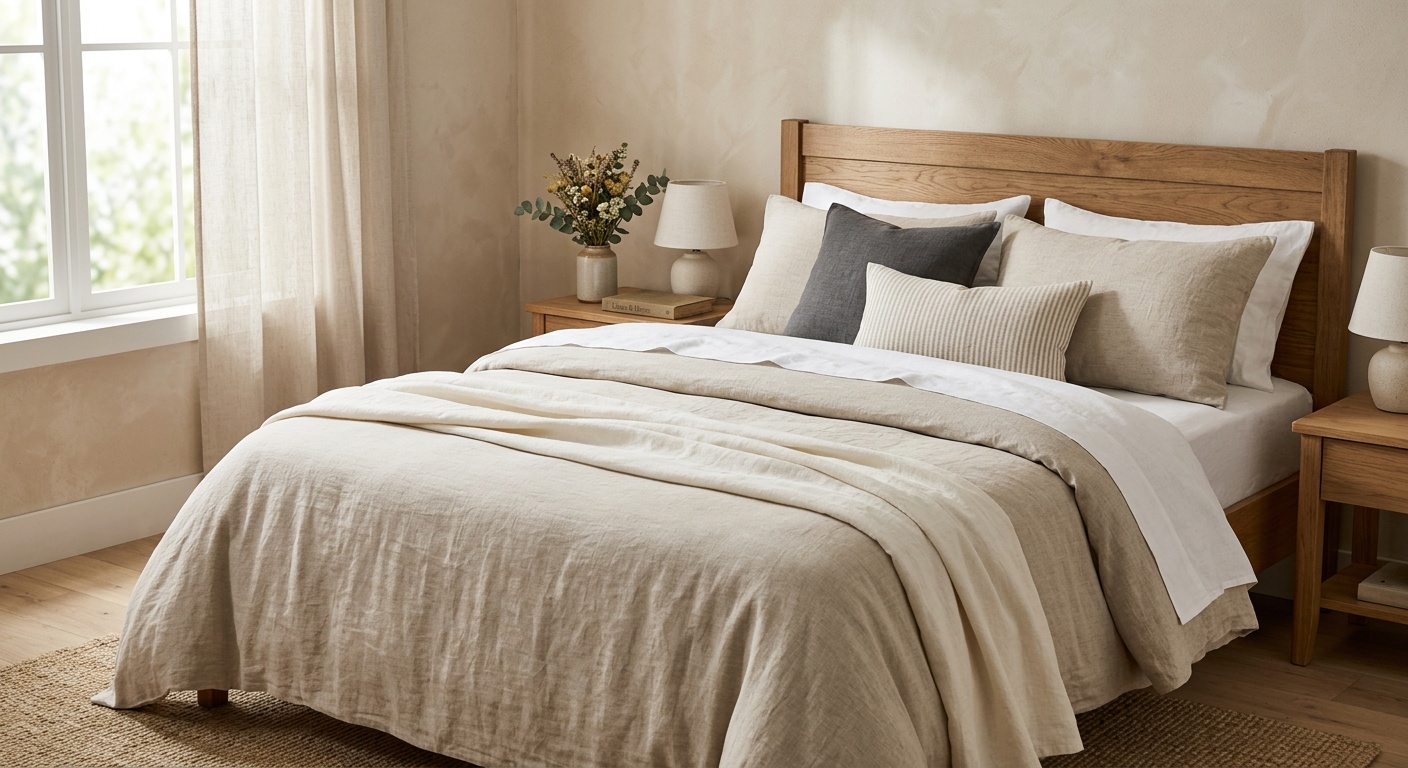
Solution: Wrinkles in linen are not a defect — they’re a characteristic. Embrace the relaxed look, or remove sheets from the dryer while slightly damp and smooth them by hand. If appearance genuinely matters to you, look for brands that offer a “washed linen” finish, which pre-relaxes the fibers so wrinkles appear more uniform and intentional. Many interior designers in 2026 consider the natural wrinkle of linen a hallmark of a well-curated, organic bedroom aesthetic.
Challenge 3: Price Shock
Solution: Quality linen bedding is a genuine investment — but reframe the math. A $250 linen sheet set that lasts 5–8 years (linen gets stronger with washing, unlike cotton which degrades) actually costs less per year than a $90 cotton set replaced every 18 months. For budget-conscious buyers, Quince offers 100% European linen at entry-level pricing. Alternatively, watch for spring sales — most linen brands run 20–30% discounts in April and May before summer demand peaks. Buying two seasons early is a legitimate strategy.
Cooling Your Entire Sleep Environment
Linen bedding is a powerful tool, but it works best as part of a holistic cooling strategy. If your bedroom environment is genuinely hot — not just your internal temperature — bedding alone won’t solve the problem entirely.
Consider pairing your linen set with blackout curtains to prevent solar heat gain during the day, and keep windows open during the cooler early morning hours to pre-cool the room. If you’re looking for practical strategies beyond your bed, there are excellent resources on how to keep room cool without ac — especially useful if you’re in an apartment or older home without central air conditioning.
Additional bedroom cooling tips that complement your linen bedding investment in 2026:
- Switch to a low-fill or linen-covered duvet insert for summer rather than removing covers entirely
- Use a cooling pillow with a natural latex or gel core — linen pillowcases amplify the effect
- Keep a glass of cold water on the nightstand to manage core temperature spikes
- Set your ceiling fan to spin counterclockwise in summer to push cool air downward
- Use a mattress topper made of natural wool or latex, which have natural temperature-regulating properties
Frequently Asked Questions
Is linen actually cooler than bamboo sheets for hot sleepers?
In most independent tests and consumer surveys, linen edges out bamboo (lyocell) specifically on breathability and long-term temperature neutrality. Bamboo feels cooler initially due to its silky texture and initial moisture absorption, but in high-humidity environments or for sleepers with intense night sweats, linen’s faster moisture-release cycle gives it a practical edge. That said, bamboo is a legitimate alternative — especially for those who find linen’s texture uncomfortable, as it is significantly softer from the first use.
How do I wash linen bedding without ruining it?
Linen is actually more durable than cotton when cared for correctly. Use cold or warm water (never hot), a pH-neutral or gentle liquid detergent, and a gentle wash cycle. Avoid bleach entirely — it weakens linen fibers over time. Tumble dry on low or line dry. Do not over-dry linen in a machine, as this can cause excessive stiffness. Most quality linen sets are machine-washable and become softer, not weaker, with each wash — a genuine advantage over cotton which degrades with repeated washing.
What GSM linen should I buy for summer versus winter?
For summer sleeping, look for linen in the 145–175 GSM range — lightweight enough for maximum airflow. For transitional seasons (spring and fall), 175–190 GSM works well. For winter or cold climates, 200+ GSM linen provides the warmth and weight most sleepers prefer. Many premium brands now offer season-labeled sets to simplify this decision. If you’re buying just one set and live in a moderate climate, a 165–175 GSM set is the most versatile year-round choice.
Your Cool-Sleep Action Plan: Next Steps
You’ve now got a comprehensive picture of why linen bedding works, what to look for, and where to find it. Here’s how to turn this knowledge into action:
- Audit your current bedding: Check the fabric composition of your existing sheets. If they’re sateen, microfiber, or polyester blend, prioritize replacing them before next summer peaks.
- Choose your tier: Premium buyer? Start with Cultiver or Parachute. Budget-conscious? Quince or Bed Threads offer excellent entry points without compromising core linen quality.
- Plan for a break-in period: Order your linen set at least 2–3 weeks before peak summer heat. Wash it 2–3 times before judging softness — you’re investing in a long-term sleep upgrade.
- Optimize the full environment: Pair your new linen set with blackout curtains, a cooling pillow, and proper ventilation strategies for maximum impact.
- Track your results: Use a sleep app or even a basic journal for the first two weeks. Most hot sleepers notice measurable improvement — fewer wake events, less sweating — within 7–10 nights of consistent use.
In 2026, the conversation around sleep quality has shifted significantly — it’s no longer just about hours in bed, but about thermal comfort, fabric science, and building a sleep environment that works with your biology rather than against it. Linen bedding sits at the intersection of all three, backed by both centuries of human use and modern textile research.
Here’s the question worth sitting with: How many summers have you already spent sleeping poorly because of your bedding? The cost of one quality linen set is almost certainly less than the accumulated cost of poor sleep — in energy, focus, and wellbeing. The investment is clear. The only remaining question is which set you’re ordering first.
Article reviewed by Tom Schuster, Roofing & Water Damage Rehabilitation Expert, on June 8, 2026