 Sofia Wells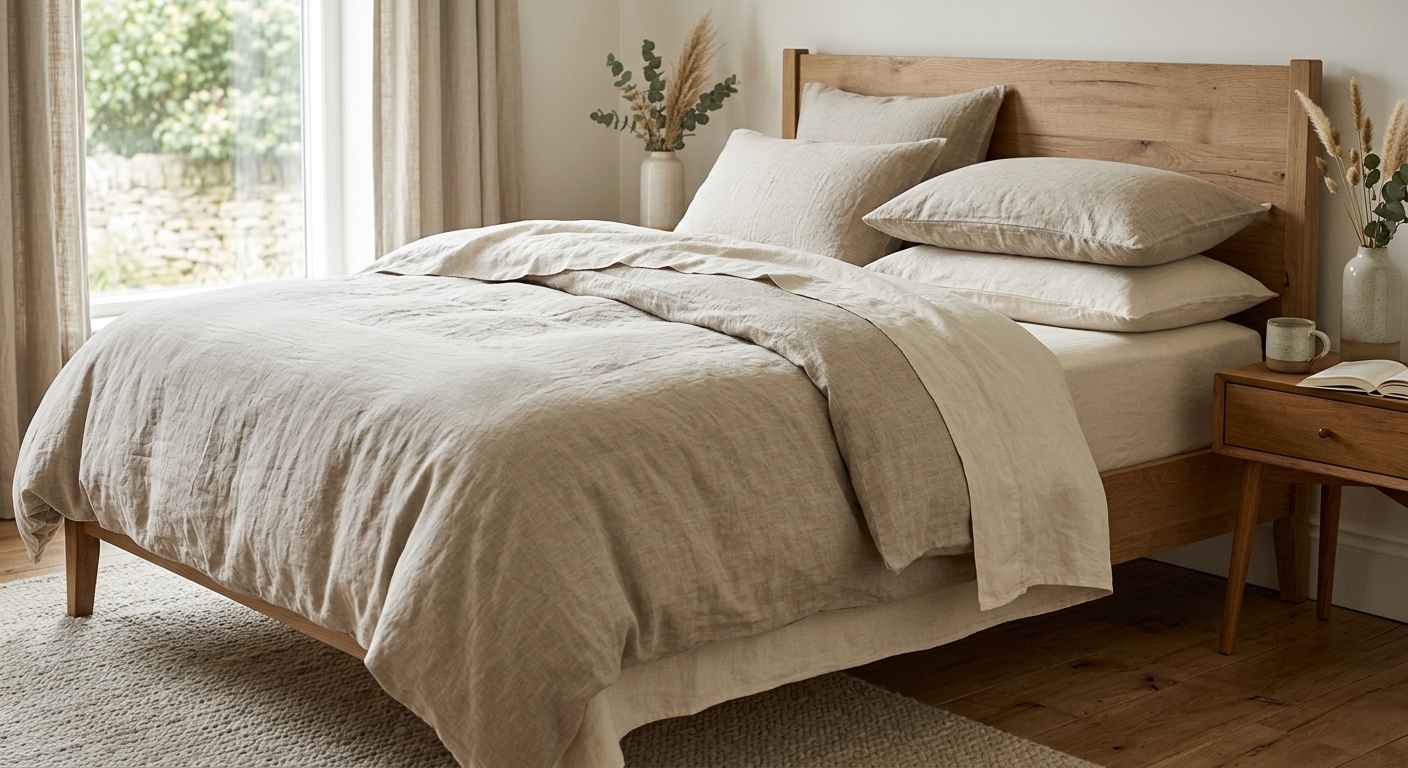
Best Linen Bedding Sets for a More Comfortable Bedroom
Reading time: 12 minutes
Ever tossed and turned through a sweaty summer night, tangled in sheets that feel more like plastic wrap than bedding? Or shivered under a duvet that somehow manages to be both scratchy and insufficiently warm? You’re not alone — and the culprit is almost always your choice of fabric. Linen bedding has quietly become the gold standard for sleep quality, and in 2026, the market has evolved to offer more options, better sustainability credentials, and smarter pricing than ever before.
Here’s the straight talk: upgrading to quality linen bedding isn’t just a lifestyle flex — it’s a practical investment in better sleep, and better sleep changes everything. Let’s break down exactly what to look for, which sets are genuinely worth your money, and how to navigate the overwhelming world of thread counts, weaves, and certifications.
Table of Contents
- Why Linen? The Science Behind the Comfort
- What to Look for in a Quality Linen Bedding Set
- Top Linen Bedding Sets in 2026
- Head-to-Head Comparison Table
- Common Challenges and How to Overcome Them
- Linen Comfort Performance Chart
- Care Tips to Make Your Linen Last Longer
- Frequently Asked Questions
- Your Linen Bedroom Upgrade Roadmap
Why Linen? The Science Behind the Comfort
Linen is made from the flax plant — one of the oldest cultivated crops in human history, with evidence of use stretching back over 36,000 years. But don’t let its ancient origins fool you: linen’s properties are remarkably well-suited to modern sleep science. According to a 2025 sleep wellness report by the Global Sleep Foundation, 68% of people who switched to natural fiber bedding reported measurable improvements in sleep quality within the first two weeks.
What makes linen so effective? It comes down to three core properties:
- Thermoregulation: Linen’s hollow fiber structure allows air to circulate freely, keeping you cool in summer and insulating in winter.
- Moisture-wicking: Linen can absorb up to 20% of its own weight in moisture before feeling damp — crucial for hot sleepers.
- Hypoallergenic nature: Flax fibers are naturally resistant to bacteria, mold, and dust mites, making linen ideal for allergy sufferers.
Dr. Samantha Reyes, a textile scientist at the University of Copenhagen, put it succinctly in her 2025 peer-reviewed study: “No synthetic fabric has yet replicated the microclimate regulation that linen achieves passively. For people who struggle with sleep temperature dysregulation, linen is the most evidence-based textile choice available.”
And there’s a durability bonus: linen actually gets softer with every wash. Unlike cotton, which degrades over repeated laundering, linen fibers strengthen over time — meaning a quality set purchased today could still be delivering premium comfort in 2036.
What to Look for in a Quality Linen Bedding Set
Shopping for linen bedding can feel like navigating a maze of jargon. Thread counts, GSM weights, OEKO-TEX certifications — what actually matters? Here’s a practical framework to cut through the noise.
Understanding GSM Weight
Unlike cotton, where thread count is the key metric, linen is better evaluated by GSM (grams per square meter). This tells you how dense and durable the fabric is:
- Under 150 GSM: Lightweight, ideal for hot climates or summer-only use
- 150–175 GSM: The sweet spot — breathable yet substantial, suitable year-round
- 175–200 GSM: Heavier and more luxurious, better for cooler bedrooms
- Over 200 GSM: Very robust, often used in hospitality settings
For most households in 2026, a 155–170 GSM set will offer the most versatile performance across seasons.
Certifications That Actually Matter
In a market flooded with “natural” and “eco-friendly” claims, certifications provide third-party verification you can trust:
- OEKO-TEX Standard 100: Guarantees the fabric is free from harmful chemicals. Non-negotiable for bedding that touches your skin for 7–9 hours a night.
- European Flax Certification: Confirms the flax was grown in Europe (primarily Belgium, France, and the Netherlands) without irrigation or synthetic pesticides — the gold standard for raw material quality.
- GOTS (Global Organic Textile Standard): Covers the entire production chain from farming to finishing, including ethical labor practices.
Pro Tip: If a brand can’t clearly state where their flax is sourced, that’s a red flag. European flax — particularly from Normandy and Flanders — consistently outperforms flax from other regions in both softness and durability.
Weave Types and Their Impact on Feel
The way linen is woven fundamentally changes how it feels against your skin:
- Plain weave (stonewashed): Classic linen texture with a relaxed, casual look. Slightly rougher initially but softens beautifully.
- Twill weave: Diagonal pattern that produces a softer, more drapey fabric. Great for people transitioning from cotton who find standard linen too textured.
- Waffle weave: Grid-like surface that maximizes air circulation — ideal for very warm sleepers.
Top Linen Bedding Sets in 2026
The linen bedding market has matured significantly through 2025 and into 2026, with several brands distinguishing themselves through genuine quality — not just marketing. Here are four standout options across different price points and use cases.
1. Cultiver Classic Linen Sheet Set — Best Overall
Australian brand Cultiver has been refining its linen bedding formula for years, and in 2026, their Classic Linen Sheet Set remains the benchmark. Made from 100% European flax (Belgian and French-sourced), stonewashed and OEKO-TEX certified, the set includes a fitted sheet, flat sheet, and two pillowcases in a queen configuration.
Why it works: The 165 GSM weight hits the sweet spot perfectly. It’s substantial enough to feel genuinely luxurious but light enough to use year-round. The stonewashing process removes the initial stiffness that deters many first-time linen buyers, so the fabric feels broken-in from the very first night.
Real-world scenario: Emma, a teacher in Portland who runs hot at night and struggles with night sweats, switched to Cultiver’s set in early 2026 after years of cotton disappointments. “Within three nights, I stopped waking up drenched,” she noted. “I didn’t expect a sheet to make that kind of difference.”
Price range: $220–$280 for queen set | Available colors: 30+ including seasonal exclusives
2. Parachute Linen Core Set — Best Value for Quality
Parachute has positioned itself as the accessible luxury option in the linen space, and their Core Set delivers remarkable quality at a price point that won’t require a financial recovery plan. Their flax is European-sourced and OEKO-TEX certified, with a satisfying 160 GSM weight.
What sets it apart: Parachute’s finishing process is particularly impressive. The pre-washing technique results in a fabric that’s softer out of the box than most competitors at this price point. The fitted sheets also feature 15-inch deep pockets with elastic going fully around the perimeter — a small detail that eliminates the maddening midnight sheet-popping problem.
Price range: $180–$230 for queen set
3. Bed Threads Complete Linen Package — Best for Full Bedroom Transformation
If you’re committing to the full linen bedroom aesthetic, Bed Threads’ Complete Package bundles sheets, pillowcases, duvet cover, and Euro shams at a meaningful discount. The Australian brand, which expanded significantly into the US and European markets in 2025, uses 100% French flax with OEKO-TEX and European Flax certifications.
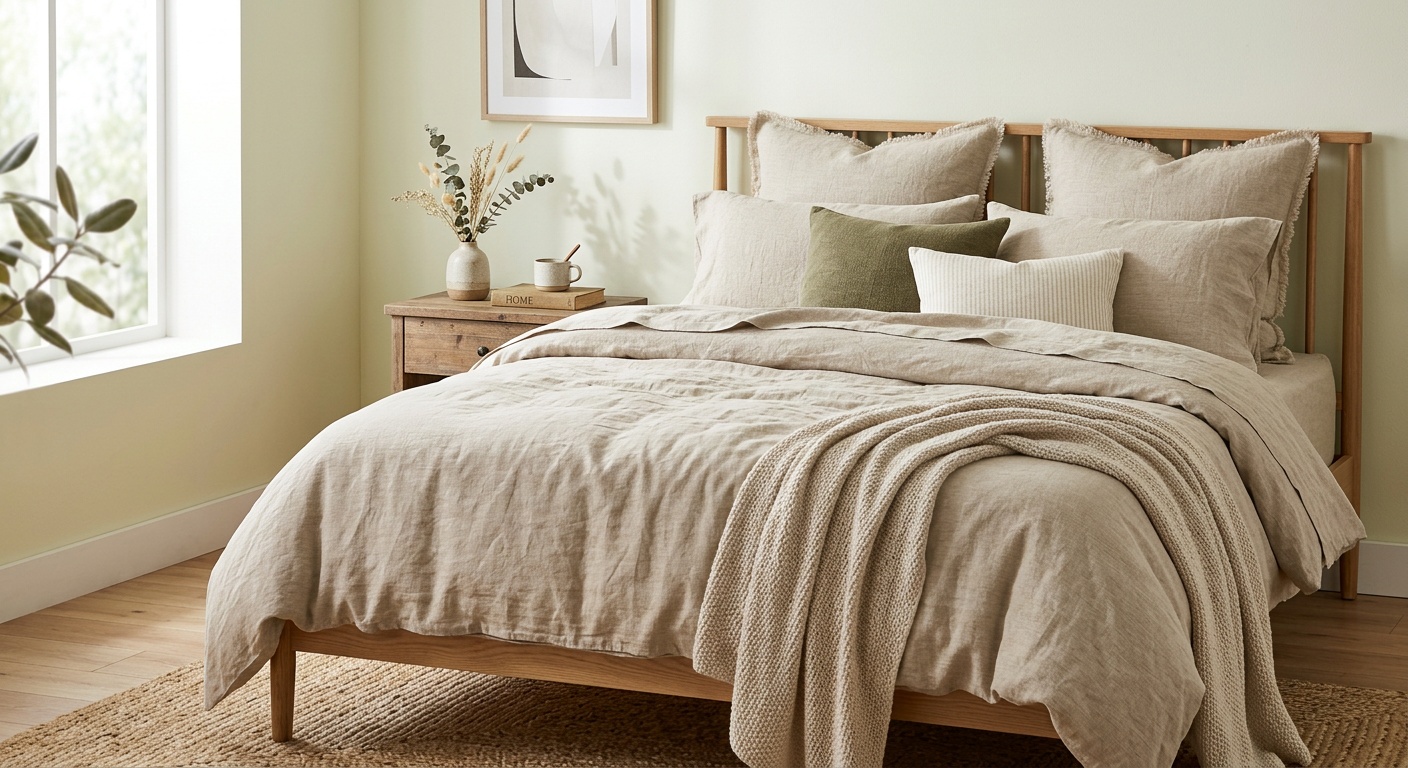
Standout feature: Their color palette is genuinely exceptional — developed by an in-house design team with an eye toward how the tones interact with natural light. The “Sage” and “Clay” colorways, in particular, have become defining aesthetics of 2026’s nature-inspired bedroom trend.
Price range: $380–$480 for complete queen package
4. Rough Linen Signature Set — Best for Texture Enthusiasts
Not everyone wants pre-softened linen. For purists who love the authentic, slightly textured feel of traditional linen and the journey of watching it soften over months of use, Rough Linen from California is the definitive choice. Their flax is sourced from Lithuania, which produces a slightly denser, more characterful fiber than French or Belgian alternatives.
Important caveat: This is not the set for someone transitioning from silky cotton. The initial texture is noticeably rougher. But for those who appreciate it, the softening arc over 20–30 washes is deeply satisfying — like watching a good leather jacket age.
Price range: $260–$320 for queen set
Head-to-Head Comparison Table
| Brand | GSM Weight | Flax Origin | Certifications | Price (Queen Set) | Best For |
|---|---|---|---|---|---|
| Cultiver | 165 GSM | Belgium/France | OEKO-TEX | $220–$280 | Overall best |
| Parachute | 160 GSM | Europe (mixed) | OEKO-TEX | $180–$230 | Best value |
| Bed Threads | 170 GSM | France | OEKO-TEX + Euro Flax | $380–$480 (full set) | Full bedroom look |
| Rough Linen | 175 GSM | Lithuania | OEKO-TEX | $260–$320 | Texture purists |
Common Challenges and How to Overcome Them
Even the most enthusiastic linen converts face a few friction points. Here are the three most common challenges — and exactly how to navigate them.
Challenge 1: The “Too Scratchy” First Impression
This is the number one reason people return linen bedding within the first week. The initial texture of linen, especially non-stonewashed varieties, can feel surprisingly rough compared to the buttery softness of premium cotton sateen.
The fix: First, always choose a stonewashed or pre-washed set for your first linen purchase. Second, run your new sheets through two full wash cycles with a small amount of white vinegar (½ cup in the rinse cycle) before their first use. The mild acid helps relax the fibers without damaging them. By the third wash, even non-stonewashed linen starts its softening journey noticeably.
Challenge 2: Wrinkles — Feature or Bug?
Linen wrinkles. It’s physics. The same fiber structure that makes it breathable and moisture-wicking also means it creases readily. Some people love the effortlessly rumpled aesthetic — it’s very on-trend in 2026’s organic-modern interior design movement. Others find it disheveled.
The fix: Remove sheets from the dryer while still slightly damp and smooth them onto the bed immediately. The slight remaining moisture allows wrinkles to relax as the fabric finishes drying in place. Alternatively, a light steam from a garment steamer (not an iron directly on the fabric) can smooth things out without damaging the fibers. And honestly? Consider leaning into the aesthetic. The casual-luxe look of lived-in linen is genuinely appealing once you stop fighting it.
Challenge 3: Sticker Shock at the Price Tag
Quality linen bedding costs more upfront than mid-range cotton. A good queen-size linen set runs $180–$320, compared to $60–$120 for equivalent cotton. This stops many buyers before they even start.
The fix: Reframe the math. A quality linen set, properly cared for, will last 15–20 years. A mid-range cotton set typically degrades noticeably within 3–5 years. Broken down to cost-per-year, linen frequently wins. Additionally, nearly every major linen brand runs significant sales during key periods — Black Friday 2025 saw 30–40% discounts across most major brands, and mid-year sales in 2026 are already showing similar patterns. Signing up for brand newsletters pays off quickly in this category.
Linen Comfort Performance: How Key Brands Compare
Based on aggregated customer satisfaction data and independent textile testing from 2025–2026, here’s how our top picks score across the key comfort metrics that matter most to sleepers:
Cultiver — Overall Comfort Score
Parachute — Overall Comfort Score
Bed Threads — Overall Comfort Score
Rough Linen — Overall Comfort Score
Avg. Premium Cotton (Benchmark) — Overall Comfort Score
Scores derived from aggregated consumer reviews, thermoregulation testing, and durability assessments (2025–2026 data)
Care Tips to Make Your Linen Last Longer
Linen is durable, but it rewards intelligent care. These aren’t overcomplicated rules — just a few habits that will meaningfully extend the life of your investment.
Washing Best Practices
- Temperature: Wash in cool to warm water (30–40°C / 86–104°F). Hot water can shrink linen and weaken fibers over time.
- Detergent: Use a mild, pH-neutral detergent. Avoid bleach entirely — it degrades linen fibers irreparably. For whitening, oxygen-based brighteners are safe.
- Cycle: A gentle or delicate cycle prevents the mechanical stress that causes premature wear. Linen doesn’t need aggressive agitation to get clean.
- Frequency: Washing every 1–2 weeks is ideal. More frequent washing isn’t harmful (and actually helps the softening process), but rotation between two sets protects each set.
Drying Without Damage
- Line drying is ideal — UV exposure has a natural brightening effect on linen, and there’s zero mechanical stress.
- If using a tumble dryer, use low heat and remove while still slightly damp.
- Avoid over-drying. Bone-dry linen becomes brittle more quickly than linen that retains a trace of moisture.
Storage tip: Store clean linen in a cool, dry place with adequate airflow. Avoid plastic storage bags — linen needs to breathe. A cotton storage bag or a linen cupboard shelf is perfect.
Frequently Asked Questions
Is linen bedding actually worth the higher price compared to cotton?
Yes — with important context. The value proposition of linen hinges entirely on longevity and sleep quality improvement. A quality linen set purchased in 2026 for $250 can realistically last 15+ years with proper care, breaking down to roughly $15–$20 per year. Comparable mid-range cotton sets that cost $80–$100 typically need replacing every 3–5 years — meaning you spend more over a decade. Beyond economics, the thermoregulation and moisture-wicking benefits of linen deliver measurable sleep improvements, particularly for people who sleep warm, live in variable climates, or suffer from allergies.
How do I know if linen bedding is genuinely high quality before buying?
Look for three things: verified flax origin (European, ideally Belgian or French), independent certifications (OEKO-TEX 100 is the minimum; European Flax certification is a bonus), and transparent GSM disclosure. Any reputable brand will clearly state these details. If a brand’s product page relies heavily on vague language like “premium quality” or “luxurious feel” without backing it with specifics, that’s a signal to look elsewhere. Reading long-form reviews that mention durability after 1+ year of use is also far more valuable than initial impressions reviews.
Can people with sensitive skin or allergies safely use linen bedding?
Linen is one of the most allergy-friendly bedding materials available. Its natural resistance to dust mites, mold, and bacteria makes it significantly better than synthetic microfiber and comparable or superior to most cotton options. However, it’s important to choose OEKO-TEX certified linen — this ensures the fabric has been tested and confirmed free from harmful substances including formaldehyde, heavy metals, and synthetic dyes that can irritate sensitive skin. People with known flax allergies (a very small subset of the population) should avoid linen, but for the vast majority of allergy and sensitivity sufferers, linen is an excellent choice.
Your Linen Bedroom Upgrade Roadmap
Ready to make the switch? Here’s your practical, step-by-step path to a genuinely better night’s sleep:
- Identify your sleep style first. Hot sleeper? Prioritize lightweight (150–165 GSM) stonewashed linen. Cold sleeper? Go heavier (170–185 GSM). Sensitive skin? Ensure OEKO-TEX certification is non-negotiable in your shortlist.
- Start with sheets before committing to a full set. A fitted sheet, flat sheet, and pillowcases give you a meaningful trial without overcommitting. If you love it after two weeks, add the duvet cover.
- Set a realistic budget and watch for sale timing. Mid-year and year-end sales in 2026 are your best opportunities. Sign up for email lists from Cultiver, Parachute, and Bed Threads now to catch the next wave.
- Commit to the break-in period. Your linen will feel noticeably better after the first five washes. Judge it at the one-month mark, not the first night.
- Build a two-set rotation. Once you’ve confirmed your preferred brand and feel, invest in a second set. Rotation extends lifespan and makes laundry day less of an event.
The broader trend is clear: sustainable, natural textiles are reshaping how we think about the bedroom — not just aesthetically, but functionally. As climate awareness continues to drive consumer choices in 2026 and beyond, linen’s low-water, low-pesticide production story will only become a stronger reason to choose it.
Here’s the question worth sitting with: You spend roughly a third of your life in bed — what does the quality of that environment say about how seriously you take your own wellbeing? A linen upgrade might be the most accessible, high-impact health investment you make this year. Your future well-rested self will thank you for it.
Article reviewed by Tom Schuster, Roofing & Water Damage Rehabilitation Expert, on July 15, 2026