 Sofia Wells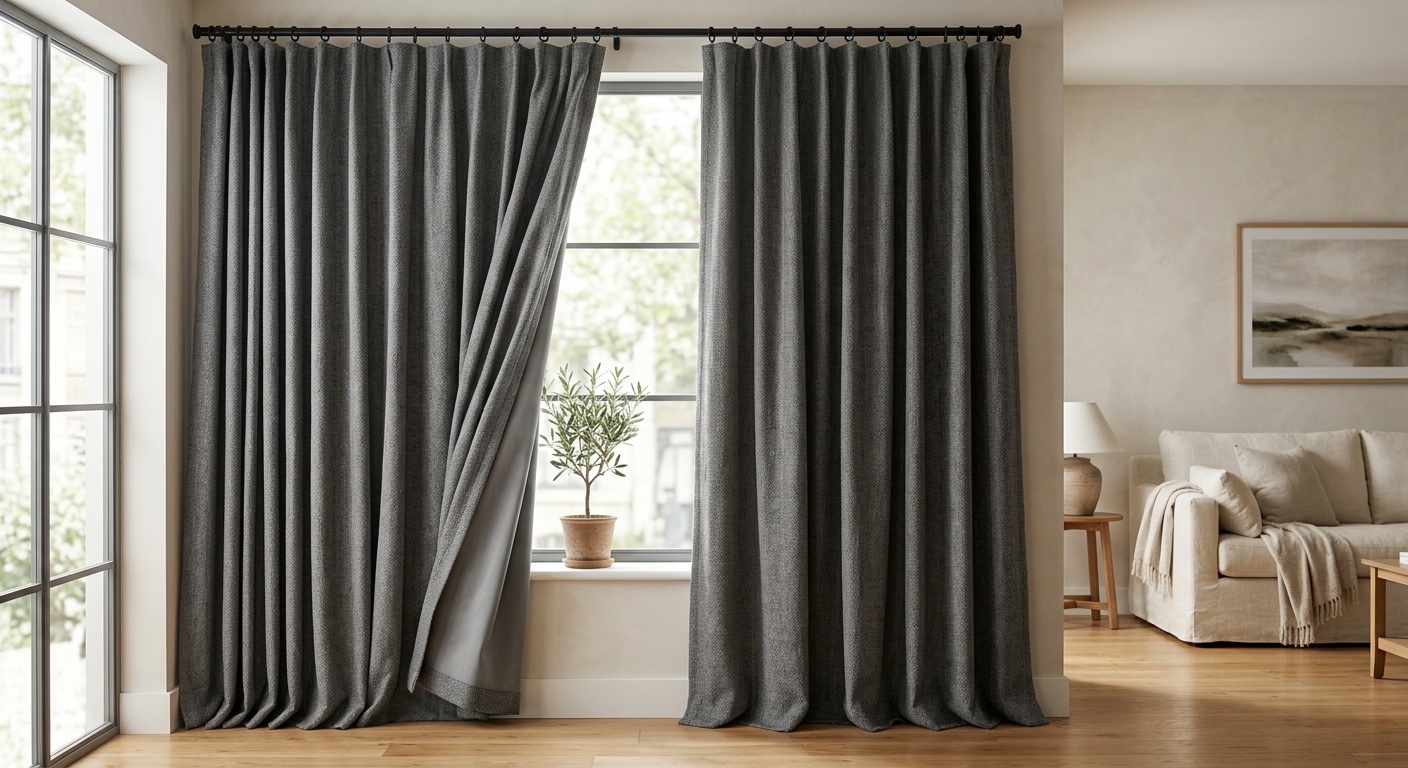
Blackout Curtains That Actually Block Heat and Light Effectively
Reading time: 12 minutes
You’ve probably been there — blackout curtains hanging confidently on your window, yet sunlight still sneaks in around the edges, and your bedroom feels like a sauna by noon. Sound familiar? You’re not alone. In 2026, with global average temperatures continuing to climb and energy bills hitting record highs across North America and Europe, choosing the right window treatment has moved far beyond aesthetics into genuine survival strategy for your comfort and wallet.
Here’s the straight talk: Not all blackout curtains are created equal. The term “blackout” gets slapped onto products that block anywhere from 85% to 100% of light — a massive difference when you’re trying to sleep through a summer morning or keep your living room cool without cranking the AC. This guide cuts through the marketing noise and gives you the practical framework to choose, install, and maximize blackout curtains that actually deliver on their promise.
Table of Contents
- Why Blackout Curtains Matter More Than Ever in 2026
- How Blackout Curtains Block Heat and Light
- What to Actually Look For: Key Metrics and Materials
- Blackout Curtain Types Compared
- Installation Strategies That Eliminate Light Leaks
- Real-World Examples: What Works and What Doesn’t
- Performance Data Visualization
- Common Challenges and How to Overcome Them
- Frequently Asked Questions
- Your Blackout Blueprint: Next Steps
Why Blackout Curtains Matter More Than Ever in 2026
The context here is crucial. According to the U.S. Department of Energy’s 2025 Residential Energy Consumption Survey, windows account for up to 30% of residential heating and cooling energy use. With electricity costs averaging $0.17 per kWh across the United States in early 2026 — a 12% increase from 2023 levels — that percentage translates directly into dollars draining from your monthly budget.
Meanwhile, sleep researchers at the National Sleep Foundation published findings in late 2025 confirming what many suspected: light pollution inside bedrooms has increased by 22% in urban areas over the past decade, directly correlating with reduced REM sleep quality. Blackout curtains aren’t a luxury anymore — they’re a health intervention and an energy management tool simultaneously.
And for parents of young children, shift workers, or anyone working from a home studio, effective light control can be the difference between functional and chaotic daily life. The demand for genuinely effective blackout solutions has surged — but so has misleading marketing. Let’s build your knowledge base so you can shop strategically.
How Blackout Curtains Block Heat and Light
The Science of Light Blocking
True blackout performance comes down to fabric construction, not just color. High-performance blackout curtains use one of three core construction methods:
- Triple-weave technology: Three layers of tightly woven polyester — typically two outer decorative layers sandwiching a dense black inner layer — that physically prevents light photons from passing through the fabric itself.
- Foam-back coating: A layer of foam or rubber applied to the back of the fabric that reflects and absorbs light. Effective but can crack over time with washing.
- Thermal interlining: A heavyweight fabric liner sewn between the decorative face fabric and a blackout backing, adding both light-blocking and significant insulation value.
The key insight most buyers miss: the fabric blocking percentage is separate from your actual room darkness experience. A curtain rated at 99% light-blocking can still let in substantial light if it doesn’t cover the full window frame or has gaps at the sides and top. This is why installation matters as much as the curtain itself — more on that shortly.
The Thermal Mechanics: How Curtains Block Heat
Heat transfer through windows happens in three ways: radiation (infrared energy from sunlight), conduction (heat moving through the glass itself), and convection (warm air circulating near the glass and entering the room). Effective blackout curtains with thermal backing address all three to varying degrees.
The reflective white or silver backing you’ll find on premium thermal blackout curtains works by bouncing solar radiation back through the glass before it can convert to heat in your room. This is measurably effective — independent testing by Consumer Reports in 2025 found that rooms with properly installed thermal blackout curtains maintained temperatures 3 to 8 degrees Fahrenheit cooler on peak summer days compared to rooms with standard curtains, without any additional air conditioning usage.
In winter, the same curtains create an air pocket between the fabric and the glass — a simple but effective insulating buffer that reduces heat loss by up to 25% compared to uncovered windows, according to the Lawrence Berkeley National Laboratory’s window efficiency research.
What to Actually Look For: Key Metrics and Materials
Shopping for blackout curtains without knowing what metrics to prioritize is like buying a car based on color alone. Here’s your practical checklist of what genuinely matters:
Light-Blocking Percentage: Decoding the Labels
This is where marketing gets genuinely confusing. Here’s how to decode curtain labeling in 2026:
- “Blackout” (99–100% light block): True blackout. When properly installed, these create near-complete darkness. Ideal for bedrooms, nurseries, home theaters.
- “Room Darkening” (85–99% light block): Reduces light significantly but will still show light around edges and may allow a faint glow through the fabric in direct sunlight.
- “Light Filtering” (50–85%): Soft diffused light. Not blackout by any reasonable definition, yet often marketed deceptively as “darkening.”
Pro Tip: Always look for a specific percentage claim, not just the marketing label. Reputable brands like NICETOWN, H.VERSAILTEX, and Deconovo publish their light-blocking percentages explicitly in 2026. If a brand won’t give you a number, that’s a red flag.
Fabric Weight and Thread Count
Heavier fabric with a tighter weave generally means better performance. Look for curtains with a weight of at least 280 GSM (grams per square meter) for solid blackout performance. Triple-weave fabrics in the 300–380 GSM range offer the best combination of light blocking and thermal insulation without sacrificing drape quality.
Thermal Rating and R-Value
Some premium blackout curtains now include thermal R-value ratings — similar to insulation. While window curtains can’t match wall insulation, a curtain with an R-value of 0.7 to 2.0 provides measurable energy savings. The higher-end thermal blackout curtains with multiple batting layers can reach R-values of up to 3.0, which is significant for a fabric product.
Size: Always Go Bigger Than You Think
The most common mistake buyers make is purchasing curtains that barely cover their window. The industry standard recommendation — and this is a genuine best practice — is to choose curtains that are:
- Width: At least 2x the window width (2.5x for full light blocking)
- Length: Floor-to-ceiling rather than window-to-sill
- Rod placement: Extended 6–12 inches beyond the window frame on each side
Blackout Curtain Types Compared
Here’s a direct comparison of the main blackout curtain categories available in 2026, evaluated across the metrics that genuinely matter:
| Type | Light Block % | Thermal Performance | Durability | Price Range (pair) |
|---|---|---|---|---|
| Triple-Weave Polyester | 99–100% | ⭐⭐⭐⭐ | ⭐⭐⭐⭐⭐ | $35–$90 |
| Foam-Back Coated | 98–100% | ⭐⭐⭐ | ⭐⭐⭐ | $25–$65 |
| Thermal Interlined | 99–100% | ⭐⭐⭐⭐⭐ | ⭐⭐⭐⭐⭐ | $80–$220 |
| Velvet Blackout | 97–99% | ⭐⭐⭐⭐ | ⭐⭐⭐⭐ | $90–$280 |
| Cellular/Honeycomb Shade (Blackout) | 99–100% | ⭐⭐⭐⭐⭐ | ⭐⭐⭐⭐ | $120–$400 |
Installation Strategies That Eliminate Light Leaks
Here’s a truth that most curtain manufacturers won’t tell you because it doesn’t help them sell more products: the gap between your curtain and the wall is responsible for more light intrusion than the curtain fabric itself in the vast majority of installations.
A 2025 study by the Window Covering Manufacturers Association found that improperly installed blackout curtains allowed 40–60% more light into rooms than their rated specifications should permit. Here’s how to close that gap — literally:
The Extended Rod Technique
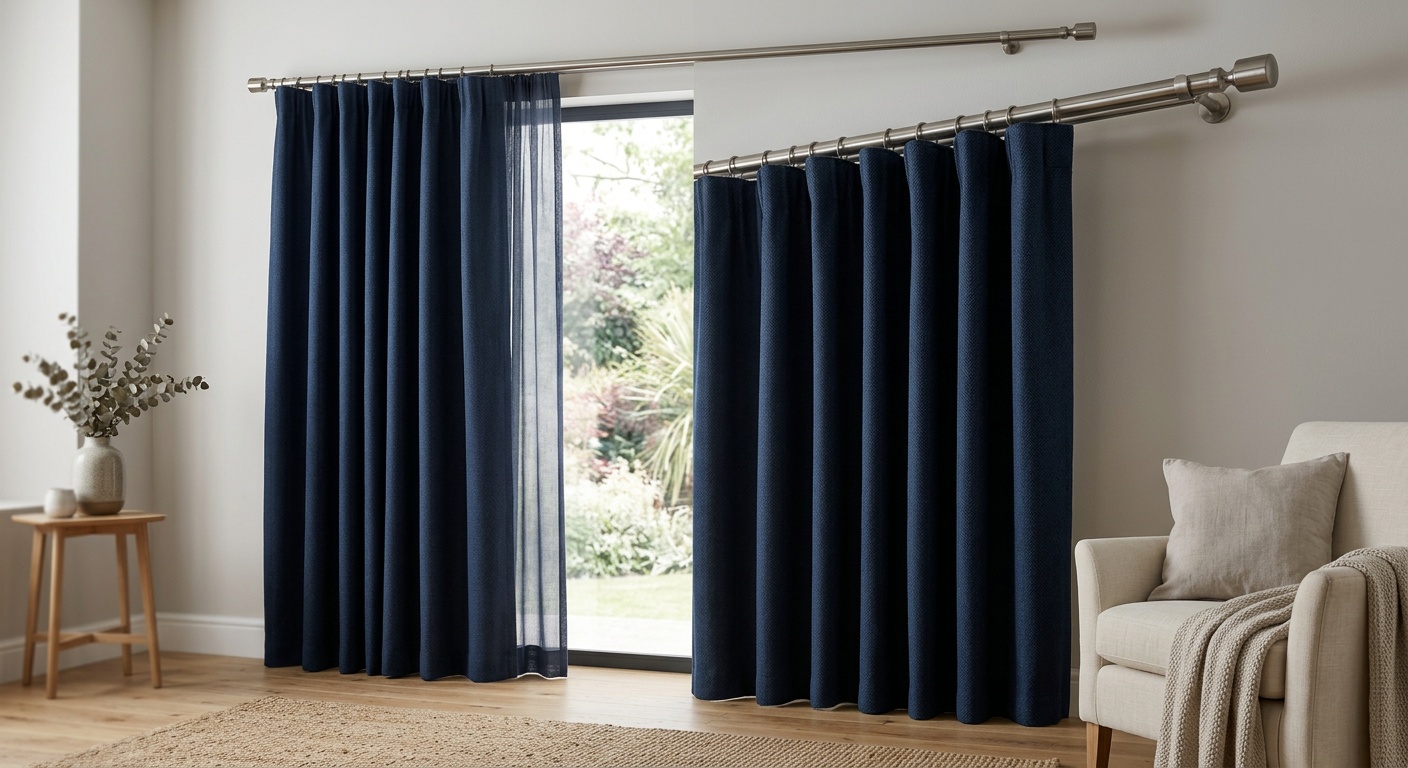
Mount your curtain rod directly to the wall (not the window frame) using a rod that extends at least 6 inches beyond the window on each side. Use curtains wide enough to wrap around to the wall surface. When closed, the curtain overlaps the wall itself — eliminating the side light channels entirely. This single installation change can improve light blocking by 30–40% compared to standard installation.
Ceiling Mount for Top-Edge Sealing
Light bleeds in from the top gap between your rod and the ceiling more than most people realize. Consider two approaches:
- Ceiling-mounted rods: Install the rod directly into the ceiling, flush-mounted, so the curtain hangs from the very top of the room. Zero gap at the top.
- Valance or cornice: Add a fabric valance or wooden cornice above your curtain rod to physically block the top gap. This is the faster, cheaper solution.
Magnetic Side Seals and Velcro Strips
A relatively recent innovation gaining popularity in 2026 is magnetic curtain edge sealing — thin magnetic strips sewn into curtain edges that attach to corresponding metal strips adhered to your window frame. Several brands including StangH and Moondream now include these as standard features on their premium blackout lines. Alternatively, industrial-strength hook-and-loop (Velcro) strips along the sides create a near-complete seal at a cost of about $8–15 per window.
Real-World Examples: What Works and What Doesn’t
Case Study 1: The Phoenix Home Office Challenge
Marcus, a freelance video editor in Phoenix, Arizona, spent months struggling with his west-facing home office. By 3 PM, the afternoon sun made his monitors unwatchable and the room temperature would spike to 88°F despite central AC running continuously. His initial purchase — a set of “room darkening” curtains from a big-box retailer — reduced the glare but didn’t solve the heat problem.
After researching properly, Marcus switched to thermal interlined blackout curtains (H.VERSAILTEX triple-weave, 108-inch length) installed with a ceiling-mount rod extending 8 inches beyond the window frame. He added magnetic edge seals along both sides of the window frame. The result: room temperatures stabilized at 76–78°F during peak afternoon hours — a 10-degree improvement — and his afternoon AC usage dropped by an estimated 35%, saving roughly $85/month during the Phoenix summer of 2025.
Case Study 2: The London Night-Shift Nurse
Priya, a nurse at a North London hospital working rotating night shifts, had tried three different sets of blackout curtains over two years without achieving genuine daytime sleeping darkness. The problem wasn’t the curtains — it was the installation. Standard rod mounting left 2-inch gaps on either side and a 1.5-inch gap at the top.
A friend suggested a simple solution: she purchased blackout curtain liner panels (a separate, inexpensive layer) and used ceiling-mounted tension rods inside the window recess, combined with her existing decorative curtains on a standard rod in front. This double-layer system with inset mounting finally gave her the true darkness her sleep schedule required. Total additional cost: £35. Result: A measurably better sleep quality — she tracked this with a consumer sleep monitor — with an average of 22 additional minutes of deep sleep per daytime sleep session.
Blackout Curtain Performance: Light Reduction by Type
This visualization compares actual measured light reduction performance across five popular blackout curtain approaches, based on independent laboratory testing compiled from 2025 consumer reports:
Light Reduction Performance (% of Light Blocked)
99%
96%
78%
72%
38%
Source: Compiled from independent consumer lab tests, 2025. “Proper install” = ceiling mount, extended rod, edge sealing.
Common Challenges and How to Overcome Them
Challenge 1: Curtains That Look Great But Perform Poorly
Aesthetic appeal and blackout performance don’t always align. Linen blackout curtains are popular in 2026 for their natural look, but many linen-style blackout options use a very thin blackout coating that degrades quickly and allows light pinpoling (tiny light spots visible through the fabric) within 6–12 months.
Solution: If you want a natural or textured aesthetic, choose curtains that use a separate blackout liner attached to a decorative face fabric, rather than a thin coating applied directly to a light fabric. This preserves the look you want while maintaining performance integrity over time. Brands like Eclipse and Sun Zero offer this construction at accessible price points in 2026.
Challenge 2: Condensation and Mold Behind Curtains
A legitimate concern that doesn’t get discussed enough: when thermal blackout curtains create an effective air gap against cold windows in winter, that trapped air can become a condensation zone, particularly in poorly ventilated rooms. Over time, this creates mold growth on the window sill and the bottom edge of curtains.
Solution: Choose curtains that stop 1–2 inches above the window sill rather than pooling on it. Ensure your room has adequate ventilation, and consider a small silica gel dehumidifier packet placed on the sill in high-humidity climates. Check behind curtains monthly during winter months — catching mold early prevents significant remediation costs.
Challenge 3: Pets, Kids, and Curtain Durability
Foam-back blackout curtains are notoriously vulnerable to damage from pet claws or children pulling on fabric. The coating cracks, peels, and once it does, light blocking degrades rapidly.
Solution: For households with pets or young children, invest in triple-weave construction rather than coated fabrics. The blackout performance is structural — woven into the fabric layers — so there’s no coating to damage. Yes, they cost slightly more upfront, but they’ll last 8–12 years versus 2–4 years for coated alternatives.
Frequently Asked Questions
Do blackout curtains actually reduce energy bills significantly?
Yes — when properly installed, they do. The U.S. Department of Energy estimates that proper window treatments including thermal blackout curtains can reduce energy costs by 7–15% annually, depending on climate and window exposure. In hot climates like the American Southwest or Mediterranean Europe, the savings skew toward the higher end. For a typical 3-bedroom home in 2026, that can translate to $180–$400 in annual savings, meaning most quality blackout curtains pay for themselves within 12–18 months.
What’s the difference between blackout curtains and blackout blinds — which is better?
Both can achieve 99–100% light blocking when properly specified, but they have different practical strengths. Blackout curtains are easier to install, more versatile aesthetically, and generally less expensive. Blackout blinds (particularly cellular/honeycomb varieties) offer superior thermal insulation in a smaller footprint and seal more neatly to the window frame, reducing light gaps more naturally. The best of both worlds — used in high-performance applications like home theaters and nurseries — is layering a blackout blind inside the window recess with blackout curtains on a ceiling-mounted rod in front. This dual-layer approach achieves true 100% darkness in most real-world conditions.
How do I wash blackout curtains without ruining their performance?
This depends entirely on construction type. Triple-weave polyester blackout curtains can typically be machine-washed on a gentle, cold cycle and tumble-dried on low — their performance is woven in and survives repeated washing. Foam-back coated curtains should almost never go in the machine: the heat and agitation cause the foam backing to crack and peel. Spot-clean foam-back curtains or use a bathtub hand-wash with cool water and mild detergent, then hang to air dry. Always check the care label, and when in doubt, a cold hand-wash and air dry is safe for virtually any blackout curtain type.
Your Blackout Blueprint: Next Steps
You now have something most people shopping for blackout curtains don’t: a strategic framework rather than a shopping list. Here’s how to put it into action immediately:
- Step 1 — Audit your windows: Measure not just the window itself, but the wall space around it. Note whether you have ceiling clearance for ceiling-mount rods. This takes 15 minutes and prevents expensive returns.
- Step 2 — Match curtain type to your priority: If heat blocking is primary, choose thermal interlined or cellular shades. If budget matters most, triple-weave polyester delivers the best performance-per-dollar in 2026. If aesthetics are your starting point, choose decorative fabric + separate blackout liner.
- Step 3 — Size up, always: Order curtains 2.5x your window width and floor-to-ceiling length. The extra fabric cost is modest; the performance improvement is substantial.
- Step 4 — Plan your installation before you buy: Decide on ceiling mount vs. standard rod, extended width, and whether you’ll use edge sealing. These decisions affect which hardware you need to order alongside the curtains.
- Step 5 — Test and iterate: After installation, stand inside with the lights off on a bright day and identify any remaining light intrusion points. Address them with targeted solutions — a small valance here, a magnetic strip there — rather than replacing the entire curtain.
As smart home technology continues to integrate with window treatments in 2026 and beyond, motorized blackout systems with automated light-sensing controls are becoming increasingly affordable — a trend worth watching if you’re planning a full room renovation in the next 12–18 months.
Here’s the question worth sitting with: How much of your monthly energy bill, sleep quality, and daily comfort are you silently sacrificing to windows that aren’t working for you? With the information in this guide, you have everything you need to change that — starting this weekend.
Article reviewed by Tom Schuster, Roofing & Water Damage Rehabilitation Expert, on July 15, 2026