 Sofia Wells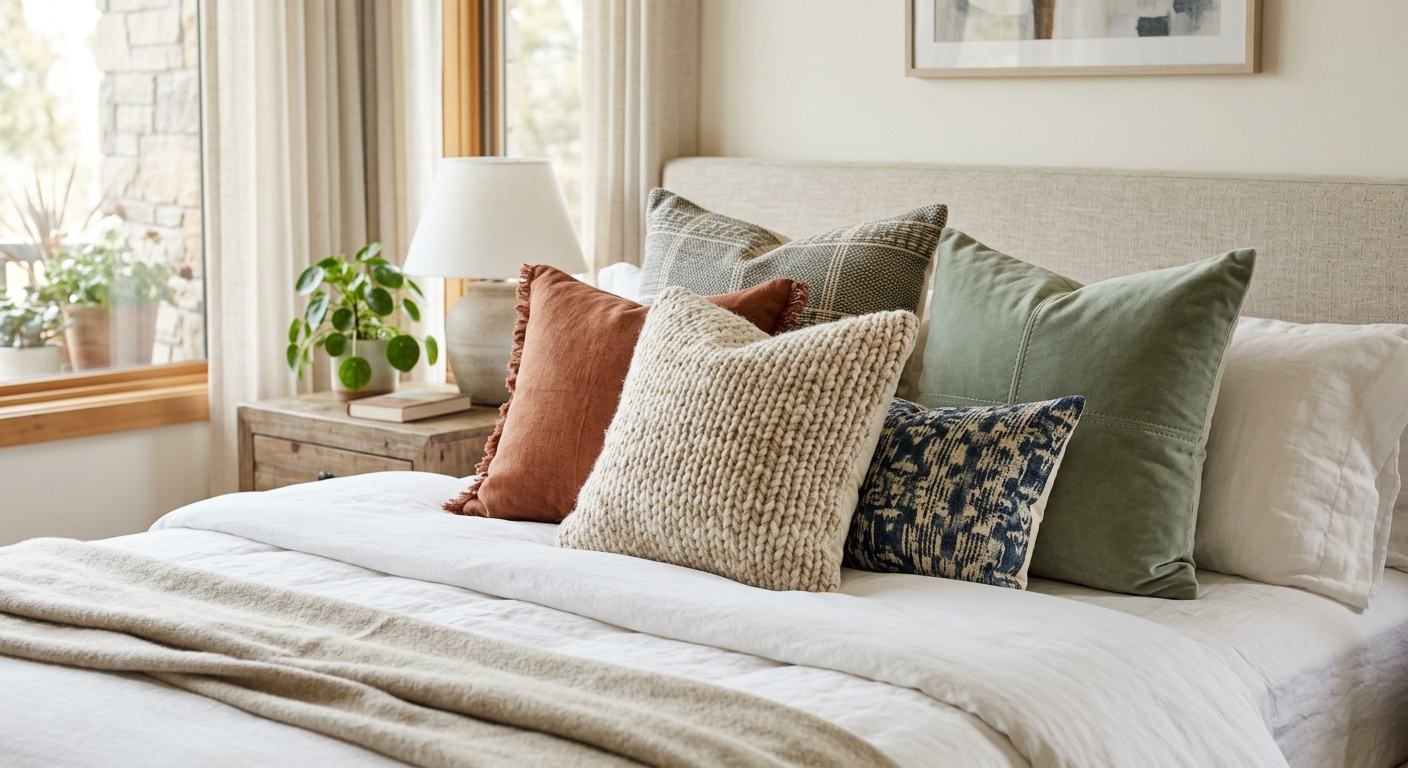
Tips for Refreshing Bedroom Interiors Cheaply: A 2026 Home Improvement Guide
Reading time: 12 minutes
Ever stared at your bedroom ceiling at midnight, mentally redesigning the entire space but immediately dismissing the idea because of the cost? You’re not alone. In 2026, with housing costs continuing to strain household budgets, the desire for a beautiful, restful bedroom is stronger than ever — but so is the pressure to keep spending in check.
Here’s the straight talk: A stunning bedroom refresh doesn’t require a contractor, a design degree, or a five-figure budget. It requires strategy, creativity, and knowing exactly where to put your dollars (and your elbow grease).
This guide is your practical roadmap for transforming a tired, uninspiring bedroom into a space you genuinely love — without the financial hangover. Whether you’re a renter working with restrictions, a homeowner on a tight budget, or simply someone who believes in spending smarter, this article has your name on it.
Table of Contents
- Why Bedroom Refreshes Matter More Than Ever in 2026
- Start With a Budget Audit, Not a Shopping Cart
- The Power of Paint: The Most Affordable Transformation Tool
- Textiles and Layering: The Secret to a Luxurious Look on Less
- Lighting Upgrades That Cost Under $50
- Furniture Hacks: Repaint, Reposition, Reimagine
- DIY Décor Projects That Actually Look Professional
- Budget Comparison: DIY vs. Retail vs. Designer
- Cost Impact by Refresh Category
- Frequently Asked Questions
- Your Bedroom, Reimagined: A Quick-Start Action Plan
Why Bedroom Refreshes Matter More Than Ever in 2026
According to a 2025 survey by the National Sleep Foundation, 67% of Americans reported that their bedroom environment directly impacts the quality of their sleep. Meanwhile, a separate study from the American Psychological Association found that cluttered, visually uninspiring living spaces contribute to elevated cortisol levels — the stress hormone — especially in people who spend significant time working from home.
In 2026, remote and hybrid work arrangements continue to blur the line between professional and personal spaces. Many bedrooms now double as home offices, creative studios, or relaxation sanctuaries. That dual-purpose pressure makes the visual and functional quality of your bedroom more psychologically significant than it was even five years ago.
The good news? The interior design industry has shifted dramatically in favor of the DIY-empowered consumer. With the explosion of AI-assisted design apps, affordable sustainable materials, and a thriving secondhand marketplace, a $200–$500 bedroom refresh in 2026 can rival what once cost $2,000.
“The most transformative bedroom designs I’ve seen in recent years weren’t born from big budgets — they came from intentional choices and a clear vision.” — Sarah Thorne, NCIDQ-certified interior designer and founder of ThreadSpace Studio, 2025
Start With a Budget Audit, Not a Shopping Cart
The number one mistake people make when refreshing a bedroom? Opening a browser tab and starting to shop before they’ve assessed what they already have. Strategic navigation of your existing resources is the foundation of a cheap but effective refresh.
The Bedroom Inventory Method
Before spending a single dollar, walk through your bedroom with a critical but creative eye. Photograph every corner. Then ask yourself these three questions:
- What can I repurpose or relocate? That bookshelf from the hallway might look incredible as a bedside storage unit.
- What needs cleaning or repairing, not replacing? A scratched nightstand might need only $8 of wood stain and 20 minutes of your Saturday.
- What is genuinely worn out and needs to go? Sometimes decluttering alone transforms a space more dramatically than any purchase.
Interior design professionals call this a “pre-design audit,” and it’s step one in every professional project — regardless of budget. The difference is that when you do it yourself, you save the $150–$300 consultation fee that usually accompanies it.
Set a Tiered Budget Framework
Once you’ve completed your audit, allocate your refresh budget into three tiers:
- Tier 1 – Zero Spend: Rearranging furniture, deep cleaning, decluttering, and swapping items from other rooms.
- Tier 2 – Low Spend ($10–$75): Paint, new hardware, fairy lights, throw pillows, and basic DIY materials.
- Tier 3 – Strategic Spend ($75–$300): A new duvet cover set, a statement mirror, a secondhand furniture piece, or a quality area rug.
Quick Scenario: Imagine you’re a 28-year-old renter in a mid-sized city. Your bedroom is functional but visually flat — beige walls, mismatched furniture, and a bedding set you’ve had since college. Your total refresh budget is $250. Using this tiered framework, you can achieve a dramatic transformation without touching your emergency fund. How? Read on.
The Power of Paint: The Most Affordable Transformation Tool
If you only do one thing to refresh your bedroom in 2026, make it paint. A single gallon of quality interior paint costs between $35 and $65 and can cover approximately 400 square feet — more than enough for one bedroom wall or a full room in a modest space. No other home improvement investment delivers a higher visual return per dollar.
In 2026, the leading color trend narratives have moved away from the all-white minimalism of the early 2020s toward what designers are calling “grounded warmth” — earthy terracottas, sage greens, warm taupes, and deep ocean blues. These tones create the kind of cocooning, calming effect that modern bedrooms desperately need.
The Accent Wall Strategy
You don’t need to paint an entire room to achieve dramatic impact. Painting a single accent wall — typically the wall your headboard sits against — transforms the room’s focal point and uses only 25% of the paint you’d need for a full room. This is an ideal approach for renters who want to negotiate a single-wall paint permission with their landlord, or for homeowners who want to test a bold color before committing.
Pro Tip: In 2026, peel-and-stick wallpaper has reached a new level of quality. Brands like RoomMates Pro and NuWallpaper now offer designs that are nearly indistinguishable from traditional wallpaper at $1.50–$3.50 per square foot — making a full accent wall achievable for under $60 and completely renter-friendly.
Case Study: Marcus and Dia’s $180 Master Bedroom Refresh
Marcus, 34, and Dia, 31, transformed their builder-grade master bedroom in suburban Columbus, Ohio, for $180 total in early 2026. Their approach: one gallon of Benjamin Moore’s “Artisan Earth” (a warm, terracotta-adjacent brown) for the accent wall behind their bed ($52), two new pillow covers from a local thrift store ($14), repositioned existing furniture to create a reading nook, and a set of warm-white string lights along the ceiling perimeter ($22). The remaining $92 went toward a secondhand rattan mirror from Facebook Marketplace. The result, per Dia: “People think we spent $800 minimum. We didn’t.”
Textiles and Layering: The Secret to a Luxurious Look on Less
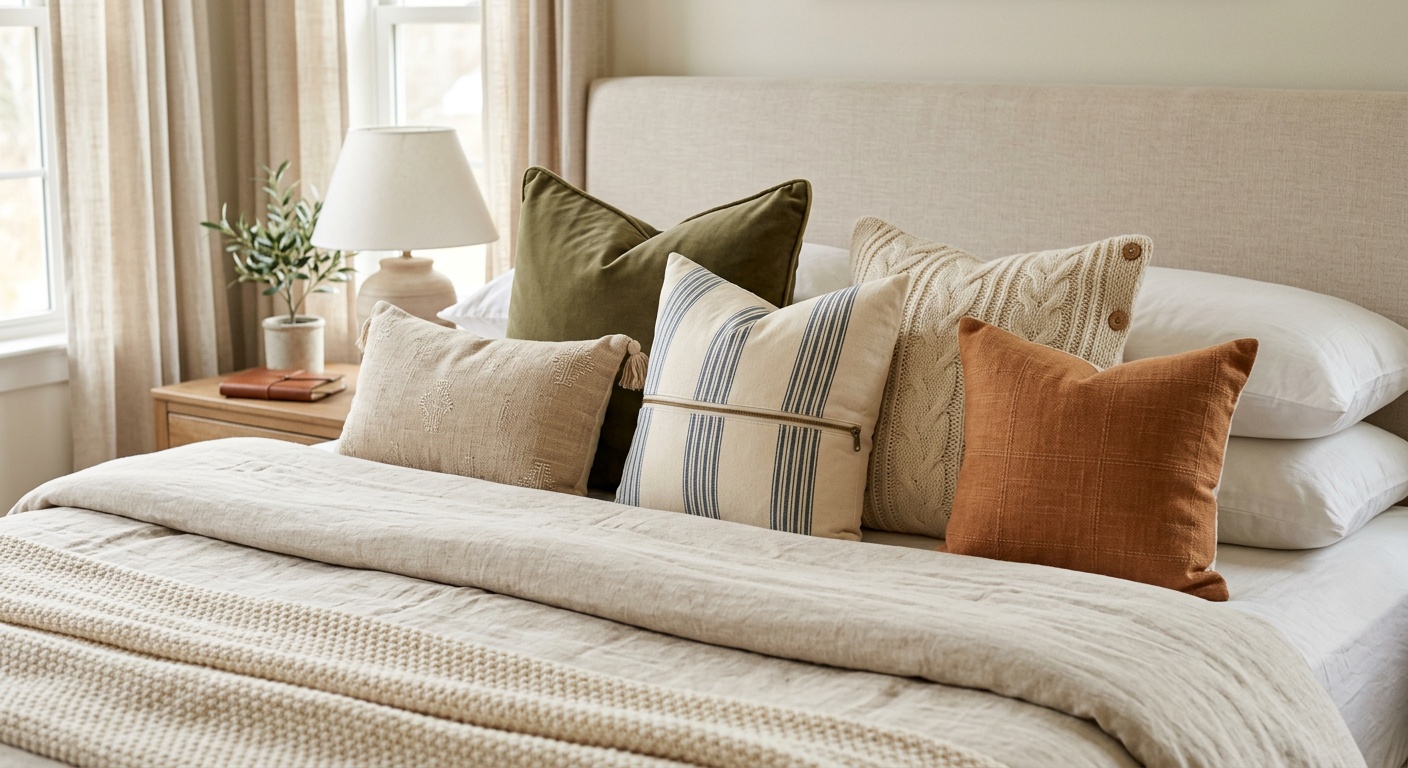
Interior designers consistently cite textiles as the fastest, most reversible way to elevate a bedroom’s perceived luxury. The bed is the visual centerpiece of most bedrooms, and what covers it communicates everything about the room’s style and tone.
In 2026, the most cost-effective approach to luxurious-looking bedding is the layer-and-mix strategy: instead of buying a matched set, combine a quality base duvet cover (often available at IKEA or H&M Home for $30–$60) with a textured throw blanket, two or three pillows of varying sizes, and at least one contrasting pillow cover in a bold color or pattern.
Where to Find Quality Textiles Without the Retail Markup
The secondhand and overstock textile market has exploded in 2026. Platforms like ThredUp (for linens), Facebook Marketplace, and local estate sales regularly offer high-thread-count duvet covers, European pillow shams, and quality throws for 70–85% below retail. A duvet cover set that retails at $180 can frequently be sourced for $25–$40 if it’s been used once or twice and laundered properly.
- IKEA NATTJASMIN duvet covers — consistently ranked as the best budget-to-quality ratio in 2025–2026 consumer reviews.
- Target’s Threshold and Studio McGee lines — frequent sale cycles bring $70 items down to $28–$35.
- Quince and Italic — direct-to-consumer brands offering Oeko-Tex certified cotton for 40–60% less than department stores.
Don’t underestimate curtains, either. Swapping out dated or thin curtain panels for floor-length, light-filtering options (always hang them from ceiling height, even if the window is lower — this creates the illusion of height) can dramatically elevate a room’s sophistication. IKEA’s MAJGULL blackout curtains ($30 per pair) have become a near-universal recommendation among budget design influencers in 2026.
Lighting Upgrades That Cost Under $50
Lighting is the most underutilized tool in budget bedroom design, yet it has an outsized effect on mood, perceived warmth, and functionality. The harsh overhead lighting common in most bedrooms is what makes spaces feel institutional rather than restful. In 2026, fixing this costs almost nothing.
Step 1: Replace your overhead bulb with a warm-white LED (2700K color temperature). A four-pack of quality LED bulbs runs $12–$16 and instantly shifts the room’s atmosphere from “hospital corridor” to “boutique hotel.”
Step 2: Add a secondary light source. A plug-in wall sconce ($18–$35) or a small table lamp sourced from a thrift store ($5–$15 plus a new bulb) creates the layered lighting that design professionals use in every project.
Step 3: Consider smart bulbs. In 2026, smart LED bulbs like the Govee or Wiz color-tunable options have dropped to $8–$12 per bulb. Being able to dim your bedroom lights or shift them to a warm amber in the evening costs almost nothing and dramatically improves your wind-down routine.
“Lighting is the single most impactful change most homeowners can make for under $50. It changes not just how a room looks, but how it feels — and that affects sleep, mood, and even productivity.” — Dr. Miriam Kalish, environmental psychologist, University of Michigan, 2025
Furniture Hacks: Repaint, Reposition, Reimagine
Furniture is where most bedroom refresh budgets balloon unnecessarily. The default impulse — buy new — is almost always the wrong move. In 2026, with furniture prices still elevated due to ongoing supply chain normalization, a new dresser from a mid-range retailer can run $350–$700. The same visual impact can be achieved for under $50 with the right approach.
The $30 Furniture Transformation
A can of furniture-specific spray paint ($8–$12) and a set of new drawer pulls ($15–$25 for a set of six from Amazon or Etsy) can make a $40 thrift store dresser look like a $400 designer piece. In 2026, the most popular furniture refresh palettes include:
- Matte black with brass or gold hardware — timeless and sophisticated.
- Chalk paint in off-white or French linen — creates a soft, European cottage feel.
- Deep forest green with brushed nickel pulls — one of the standout color trends for bedroom furniture in 2025–2026.
Furniture repositioning is also criminally underrated. Moving your bed to a different wall — particularly positioning it so the headboard faces the door but isn’t directly in line with it (a concept borrowed from feng shui principles) — can make a familiar space feel entirely new, costs nothing, and takes about 20 minutes.
Case Study: Priya’s Rental Bedroom Transformation on $220
Priya, a 26-year-old graphic designer in Chicago, refreshed her rental bedroom in late 2025 without violating a single clause of her lease. Her approach: peel-and-stick geometric wallpaper on the accent wall ($55), new curtain panels hung from tension rod hooks at ceiling height ($38), a thrifted wooden mirror painted gold ($12 for the mirror, $7 for spray paint), IKEA fairy lights along the bed headboard area ($15), and two sets of new pillow covers ($18 from H&M Home). Total spend: $145. Her landlord now uses photos of her bedroom in the apartment listing.
DIY Décor Projects That Actually Look Professional
The DIY décor space has matured significantly by 2026. AI-assisted design tools, YouTube tutorials, and step-by-step apps like Houzz Pro’s DIY planner mean that even first-time crafters can achieve genuinely polished results. Here are three high-impact, low-cost projects worth attempting:
1. Gallery Wall Using Thrifted Frames
A gallery wall of mismatched frames, unified by a single paint color applied to all frames, creates a curated, designer look. Source frames from thrift stores for $1–$5 each, spray paint them all the same color (matte black or antique gold are universally flattering), and fill them with printed artwork from free sites like Unsplash or Canva’s art print library. Total cost: $20–$35.
2. Macramé or Woven Wall Hanging
Macramé kits remain popular in 2026 and are available for $18–$30 online. A wall hanging above the bed adds organic texture that’s impossible to replicate with a framed print. Even a beginner-level piece looks intentional and handcrafted — which is exactly the aesthetic that currently dominates bedroom design.
3. DIY Limewash Effect
Limewash paint — which creates a beautifully textured, aged plaster look — has become one of the hottest bedroom wall treatments of 2025–2026. Traditional limewash paint runs $40–$70 per gallon, but a convincing DIY version can be created by thinning chalk paint with water (7 parts paint to 3 parts water) and applying it with a dry brush in layered, circular motions. The result is stunning and costs under $25 for a feature wall.
Budget Comparison: DIY vs. Retail vs. Designer
| Refresh Element | DIY / Thrift Cost | Retail Cost | Designer / Premium Cost |
|---|---|---|---|
| Accent Wall (Paint/Wallpaper) | $25–$60 | $80–$150 | $300–$700 |
| Bedding / Duvet Set | $20–$60 | $80–$200 | $300–$900 |
| Lighting Upgrade | $15–$45 | $60–$150 | $200–$500 |
| Dresser / Nightstand | $30–$80 | $150–$500 | $600–$2,000+ |
| Wall Art / Décor | $10–$35 | $50–$200 | $200–$1,500+ |
Cost Impact by Refresh Category: Visual Overview
The chart below illustrates the approximate visual impact score (out of 100) that each refresh category delivers relative to its average DIY cost — helping you prioritize where to spend first.
95 / 100
88 / 100
82 / 100
74 / 100
68 / 100
Visual impact score based on aggregated interior design expert ratings and consumer satisfaction surveys, 2025–2026.
Frequently Asked Questions
How much should I realistically budget for a bedroom refresh in 2026?
A meaningful bedroom refresh in 2026 is achievable for as little as $100–$150 if you’re willing to prioritize thrift shopping and DIY projects. A mid-range transformation that touches most elements — walls, bedding, lighting, and at least one furniture piece — typically lands between $200 and $400. The key is deciding upfront which three or four changes will have the most visual impact in your specific space, and allocating your budget there rather than spreading it too thin across many small purchases that don’t move the needle significantly.
Can renters make significant bedroom improvements without risking their security deposit?
Absolutely. In 2026, the range of renter-friendly products is wider than ever. Peel-and-stick wallpaper, removable wall hooks rated for heavier frames, tension-rod curtain systems, plug-in wall sconces, and freestanding furniture pieces all allow dramatic transformations with zero permanent impact. The critical step is documenting the room’s original condition with photos before making any changes, and always reading your lease carefully — most leases prohibit drilling or painting without permission, but none prohibit changing textiles, lighting fixtures using existing outlets, or adding freestanding décor.
What are the biggest mistakes people make when trying to refresh a bedroom on a budget?
The three most common mistakes are: first, buying many inexpensive items instead of investing in one or two quality focal points — a room full of cheap clutter looks worse than a sparse room with a few intentional pieces; second, ignoring lighting entirely, which is the most common reason a refreshed room still feels “off” despite other improvements; and third, starting with shopping rather than starting with editing. Removing unnecessary items from a bedroom almost always makes it look and feel better immediately — and it’s completely free. Always declutter before you decorate.
Your Bedroom, Reimagined: A Quick-Start Action Plan
You’ve got the knowledge. Now here’s how to turn it into action this week — without overthinking, overspending, or overwhelming yourself.
- Day 1 – Audit and Edit: Spend 60 minutes removing everything from your bedroom that doesn’t serve a clear function or bring you genuine visual pleasure. Photograph the space. Identify your three highest-impact opportunities.
- Day 2 – Rearrange Before You Redecorate: Move your furniture. Try your bed on a different wall. Reposition lamps, mirrors, and shelving. This costs nothing and often produces the single biggest improvement.
- Day 3–5 – Source Strategically: Check Facebook Marketplace, thrift stores, and discount retailers before buying anything at full price. Most of what you need — a mirror, a throw, a lamp — exists secondhand within five miles of where you live.
- Weekend 1 – Paint or Paper: Tackle your accent wall. Give yourself a Saturday afternoon and $40–$60. This is your single highest-ROI refresh action.
- Weekend 2 – Layer and Light: Add your new bedding layers, hang curtains at ceiling height, and install warm-white lighting. Step back, take a photo from the doorway, and compare it to your Day 1 starting point.
As 2026 continues to shape a design culture that values intentionality over excess, the bedroom has become one of the most personally meaningful spaces in the home — a direct reflection of how we choose to restore, recharge, and express ourselves. The ability to transform that space on a budget isn’t a compromise; it’s a skill.
Here’s the question worth sitting with: If your bedroom already felt like the most peaceful, beautiful room in your home, how differently might you sleep, think, and show up tomorrow? That answer is worth $200 and a weekend of your time.
Your dream bedroom isn’t waiting for a bigger budget. It’s waiting for a better plan — and now you have one.
Article reviewed by Tom Schuster, Roofing & Water Damage Rehabilitation Expert, on July 15, 2026