 Sofia Wells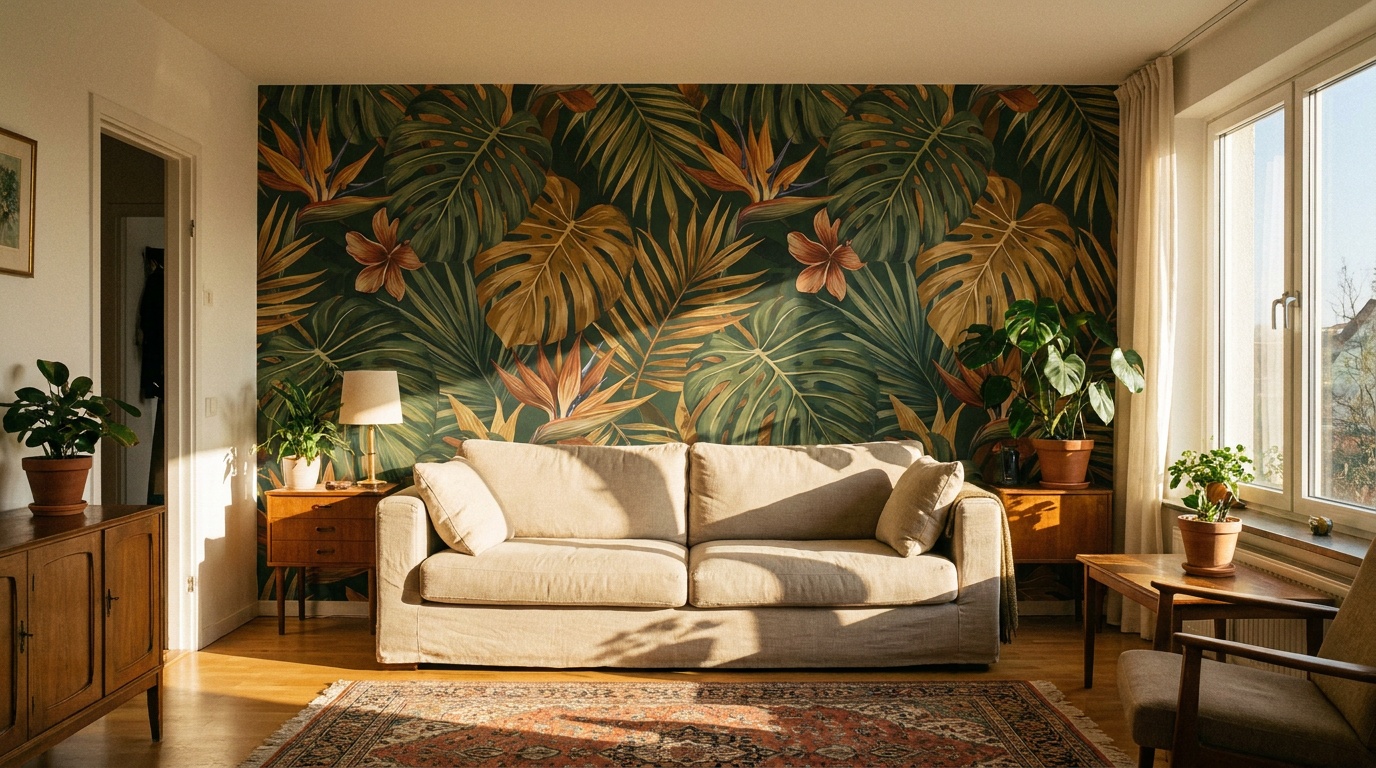
Using Statement Wallpaper as an Accent Feature: Tips and Trends for 2026
Reading time: 12 minutes
Ever walked into a room that stopped you in your tracks — not because of expensive furniture or elaborate lighting, but because of one extraordinary wall? That’s the quiet power of statement wallpaper done right. In 2026, accent wallpaper has evolved far beyond the dated “feature wall” concept of the 2010s. It’s now a sophisticated design tool that can reshape how a space feels, functions, and communicates personality.
But here’s the honest truth: most people either go too bold and regret it, or play it too safe and feel underwhelmed. Getting it right requires a strategic eye, a clear understanding of pattern scale, and knowledge of what’s actually trending — not just what looked good two seasons ago.
This guide is your practical roadmap. Whether you’re redecorating a living room, refreshing a rental apartment with peel-and-stick options, or designing a high-impact commercial space, we’ll walk you through the decisions that matter most.
Table of Contents
- Why Statement Wallpaper Works as an Accent Feature
- The Biggest Wallpaper Trends Dominating 2026
- Choosing the Right Wall: The Art of Strategic Placement
- Pattern Scale, Colour, and Room Proportion
- Real-World Examples: What Works and Why
- Common Challenges and How to Overcome Them
- Wallpaper Style Popularity: 2026 Data Snapshot
- Style Comparison: Accent Wallpaper Options at a Glance
- FAQs
- Your Statement Wall Roadmap: Next Steps
Why Statement Wallpaper Works as an Accent Feature
There’s a reason interior designers consistently recommend accent wallpaper over full-room application for most residential projects: restraint creates impact. When a bold pattern or rich texture is confined to a single wall or architectural zone, the eye is drawn to it deliberately. The contrast with surrounding painted or neutral surfaces amplifies the effect rather than diluting it.
According to a 2025 report by the Home Improvement Research Institute (HIRI), wallpaper sales in North America grew by 34% between 2023 and 2025, with accent or feature-wall applications accounting for nearly 61% of all residential wallpaper purchases. That shift reflects a broader cultural move toward intentional, curated interiors — rooms that feel designed rather than simply furnished.
Interior designer and design columnist Priya Mehta summarized this shift neatly in a 2025 interview with Architectural Digest: “We’ve moved past the era of decorating every surface. Clients today want one thing in a room to genuinely astonish them. Statement wallpaper, when used well, does exactly that.”
The psychological dimension matters too. Research published in the Journal of Environmental Psychology (2024) found that rooms featuring a single high-contrast accent wall were rated by participants as 28% more memorable and 22% more “personalized” than rooms with uniform decoration — even when all other furnishings were identical. That’s not a small margin.
The Accent Wallpaper vs. Full-Room Wallpaper Debate
Full-room wallpaper application has its place — particularly in powder rooms, dining rooms, or spaces where immersive, envelope-style design is intentional. But for most living rooms, bedrooms, and open-plan spaces, full-room application can overwhelm, especially when working with bold or large-scale patterns.
The smarter move for most homeowners? Treat accent wallpaper like a piece of art. It should command attention, tell a story, and invite conversation — without competing with every other design element in the room.
The Biggest Wallpaper Trends Dominating 2026
Design trends in 2026 are being shaped by three converging forces: a continued reaction against sterile minimalism, growing consumer interest in sustainable and artisanal materials, and the influence of digital design tools that have democratized access to custom and bespoke wallpaper patterns. Here’s what’s leading the conversation:
1. Botanical and Biophilic Prints — Still Reigning, Now Evolved
Botanical wallpaper has been climbing since the early 2020s, but 2026’s iteration is more sophisticated and scientifically accurate. We’re seeing detailed botanical illustrations inspired by 18th-century herbarium prints — not the tropical maximalist prints of 2022, but quieter, more precise renderings of native plants, ferns, and woodland scenes. Earthy palettes of ochre, sage, burnt sienna, and warm cream dominate.
This dovetails with the biophilic design movement, which emphasizes the human need to connect with natural forms. For accent walls, a beautifully rendered botanical print behind a reading chair or headboard creates an immersive yet calm focal point.
2. Geometric Abstraction with Tactile Depth
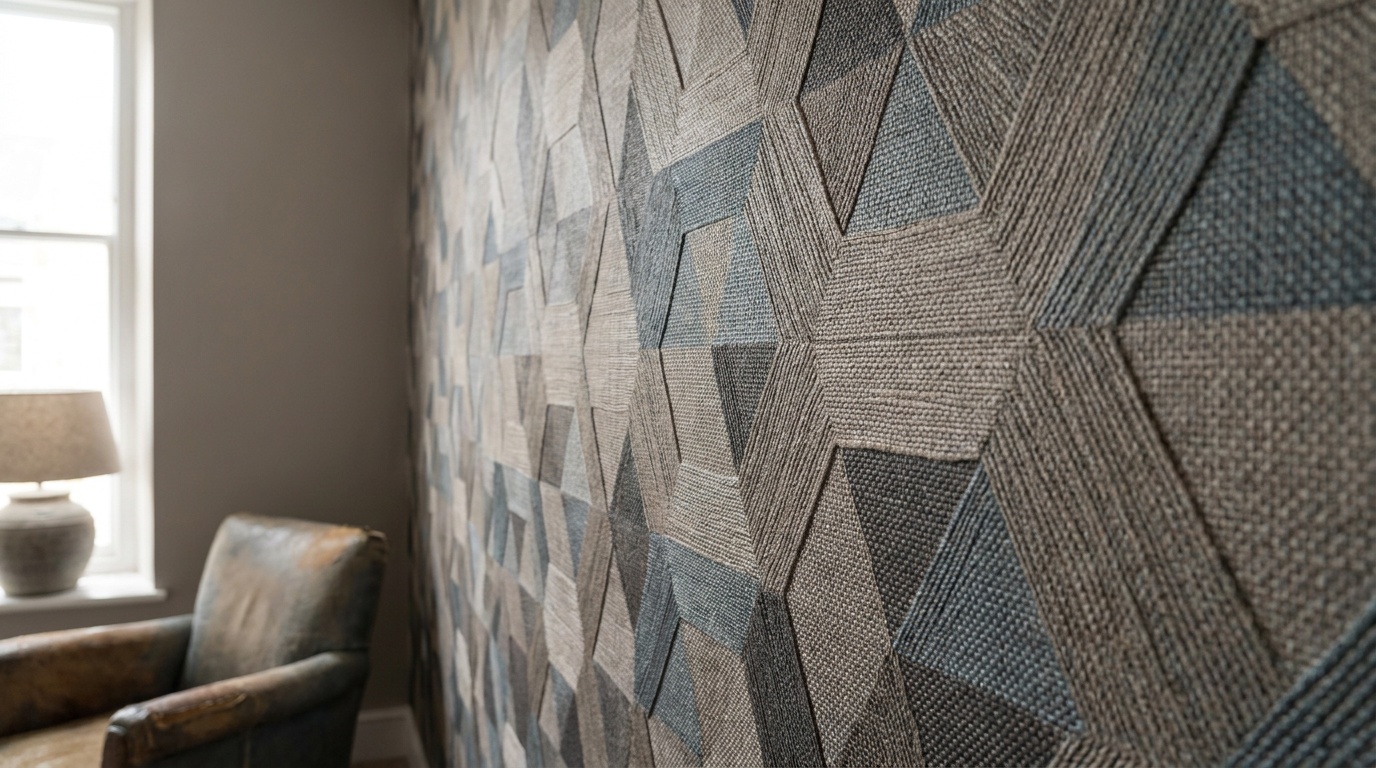
Flat geometric patterns are giving way to designs that create an illusion of three-dimensionality — arches, ribbed surfaces, tessellating forms that seem to shift as you move around the room. In 2026, this geometric revival is being executed in tone-on-tone colorways (think deep charcoal on slate, or cream on warm white), which adds sophistication without visual noise.
3. Maximalist Murals and Panoramic Scenes
Large-scale mural wallpapers — depicting landscapes, cityscapes, or abstract cloudscapes — are increasingly popular in dining rooms and primary bedrooms. Unlike smaller repeat patterns, these murals are designed to be experienced as complete artworks spanning an entire wall. Companies like Rebel Walls, Photowall, and a wave of independent illustrators on platforms like Society6 now offer custom-sized options that fit any wall precisely.
4. Sustainable and Textured Wallcoverings
Grasscloth, seagrass, cork, and recycled fabric wallcoverings are surging in popularity as eco-conscious design becomes non-negotiable for many consumers. A 2025 survey by Houzz found that 47% of homeowners cited sustainability as a “significant factor” in their wallpaper purchasing decision — up from just 29% in 2022. Textured natural materials work beautifully as accent features because they add both visual and tactile interest.
5. Vintage Revival: Art Deco and 1970s-Inspired Patterns
The cyclical nature of design has brought both Art Deco geometry and 1970s earth-toned organic forms back into the spotlight. Jewel-toned peacock prints, sunburst patterns, and warm terracotta medallion designs are appearing on accent walls in entryways and home offices — bringing nostalgia with a modern edge.
Choosing the Right Wall: The Art of Strategic Placement
This is where most DIY decorators make their first mistake: they choose a pattern they love, then figure out where to put it. The professional approach inverts this — you identify the right wall first, then select a pattern suited to it.
Here’s a practical framework for choosing your accent wall:
- The focal point wall: In a bedroom, this is almost always the wall behind the headboard. In a living room, it’s often the wall the sofa faces, or the wall flanking a fireplace. These are natural anchor points that the eye seeks out.
- The architectural interest wall: A wall with alcoves, built-in shelving, or a chimney breast already has structural character. Wallpaper here amplifies rather than creates interest.
- The corridor or transition wall: Hallways and entryways are underestimated. Because you pass through rather than sit in them, even very bold patterns work without becoming fatiguing.
- Light-source considerations: North-facing walls in lower-light rooms benefit from warm-toned, reflective wallpapers. South-facing walls with abundant natural light can carry deeper, richer colors without feeling oppressive.
Pro Tip: Avoid placing statement wallpaper on a wall that’s broken up by multiple windows, doors, or light switches. Interruptions fragment the pattern and undercut the visual drama. You want as clean and uninterrupted a canvas as possible.
Pattern Scale, Colour, and Room Proportion
Pattern scale is arguably the most technically important decision in accent wallpaper selection — and it’s consistently misunderstood. The rule of thumb is simple: match pattern scale to room scale. But the nuance lies in knowing when to break that rule intentionally.
Small Rooms
Contrary to popular belief, small rooms can handle large-scale patterns — but only when the pattern has generous negative space (background breathing room). A large floral with plenty of white or pale background in a small bedroom will feel expansive. A dense, busy small-scale pattern in the same room will feel claustrophobic.
Large Rooms
Large rooms can absorb almost any pattern scale, but small, delicate prints may get “lost” at a distance and fail to register as the bold statement you intended. In spacious rooms, go big, go graphic, or go textured.
Colour Strategy
For accent wallpaper to harmonize with the rest of a room, extract one or two colors from the wallpaper’s palette and echo them in soft furnishings, cushions, or accessories. This creates visual cohesion without matchy-matchy predictability. Alternatively, choose a wallpaper in a complementary color to your dominant room palette — for a room anchored in warm neutrals, an accent wall in deep teal or aged indigo creates compelling contrast.
Real-World Examples: What Works and Why
Case Study 1: The Brooklyn Loft Transformation
Interior designer Camille Okafor documented a 2025 project for a Brooklyn loft apartment where the client — a 34-year-old tech entrepreneur — wanted a home office that felt creatively stimulating but not chaotic. The solution: a single accent wall covered in a large-scale abstract mural wallpaper depicting ink-wash brushstrokes in charcoal and warm bronze. The remaining three walls were painted in a muted warm white.
The result was a space that felt artistically ambitious without sacrificing the focus the client needed for work. The wallpaper wall sat directly behind the desk, creating a dramatic backdrop for video calls. Okafor noted that the client reported feeling “more creatively engaged” after the renovation — a subjective benefit, but one that aligned with research on environmental stimulation and cognitive performance.
Key takeaway: A single statement wall can define a room’s purpose and mood without requiring a complete furniture overhaul. The wallpaper did more work than the desk, chair, and lighting combined.
Case Study 2: A London Victorian Terrace — Pattern Meets Period Architecture
In a 2026 project featured in House & Garden UK, designer James Alcott faced a classic challenge: how to introduce contemporary wallpaper into a Victorian terrace without clashing with original period features. His approach was to use a William Morris-inspired botanical print — updated with a slightly moodier, more saturated palette — on the chimney breast wall of the sitting room.
The original cornicing, picture rail, and fireplace surround remained untouched. The wallpaper acted as a bridge between old and new, its botanical motifs echoing the Victorian love of nature while the deeper coloring (forest green and antique gold) kept it feeling current. The room’s other walls were painted in a complementary deep sage, allowing the chimney breast to anchor the whole composition.
Key takeaway: Accent wallpaper in period homes works best when it converses with existing architectural features rather than competing with them. Pattern heritage matters: Morris-influenced designs feel at home in Victorian spaces in a way that geometric abstraction might not.
Common Challenges and How to Overcome Them
Challenge 1: Renter-Friendly Application
One of the most common barriers to statement wallpaper is the fear of permanent commitment — especially for renters. The good news: peel-and-stick wallpaper technology has improved dramatically. By 2026, brands like Tempaper, Chasing Paper, and WallsNeedLove offer repositionable, damage-free options in genuinely sophisticated designs that are virtually indistinguishable from traditional wallpaper at conversational distance.
Practical steps for renters:
- Test adhesion on a small, hidden section of your specific wall type before full application
- Document the original wall condition with photos before installation
- Remove peel-and-stick wallpaper slowly and at an angle to minimize any residue
- Avoid application on textured walls (orange peel or knockdown finishes) — adhesion is unreliable
Challenge 2: Pattern Matching Errors During Installation
Pattern matching is the technical bane of DIY wallpapering. Misaligned patterns, especially in large repeat designs, are immediately noticeable and visually jarring. The solution is twofold: buy 15-20% more wallpaper than your wall measurement requires (to account for pattern matching waste), and dry-hang the first two panels before pasting to verify alignment.
For complex patterns with large repeats (over 25cm), seriously consider professional installation. The cost of a professional — typically £150–£350 in the UK or $200–$450 in the US for a single accent wall in 2026 — is far lower than the cost of ruined wallpaper or a botched result.
Challenge 3: Commitment Anxiety — “What if I Hate It?”
This is genuinely the most common emotional barrier. Here’s the strategy that works: order large physical samples (A3 size minimum, ideally A2) and live with them on your chosen wall for at least 48–72 hours before ordering. Observe how the sample looks in morning light, afternoon light, evening artificial light, and overcast conditions. Patterns and colors behave dramatically differently under different light conditions — what looks gorgeous at midday may feel oppressive at 7pm.
If you’re still uncertain, start with a lower-commitment application — a small interior wall, an alcove, or even a wardrobe interior — before committing to a full-length bedroom feature wall.
Wallpaper Style Popularity: 2026 Data Snapshot
Based on aggregated 2025–2026 search trend data and sales analytics from leading wallpaper retailers, here’s how the major style categories rank in consumer popularity for accent wall applications:
Accent Wallpaper Style Popularity (2026)
78%
64%
55%
48%
42%
Source: Aggregated retail sales data & search trend analysis, 2025–2026. Figures represent percentage of accent wall wallpaper purchases within category.
Style Comparison: Accent Wallpaper Options at a Glance
| Style Category | Best Room Application | Longevity / Timelessness | DIY Friendliness | Avg. Price (per roll, 2026) |
|---|---|---|---|---|
| Botanical / Biophilic | Bedroom, Living Room | ⭐⭐⭐⭐⭐ | ⭐⭐⭐ | $45–$120 |
| Geometric Abstract | Home Office, Hallway | ⭐⭐⭐⭐ | ⭐⭐⭐⭐ | $35–$95 |
| Mural / Panoramic | Dining Room, Bedroom | ⭐⭐⭐ | ⭐⭐ | $80–$250+ |
| Vintage / Art Deco | Entryway, Powder Room | ⭐⭐⭐ | ⭐⭐⭐ | $40–$110 |
| Natural / Textured | Living Room, Study | ⭐⭐⭐⭐⭐ | ⭐⭐ | $60–$180 |
Additional Practical Guidance: Making Your Statement Wall Last
Once you’ve installed your accent wallpaper, protecting your investment matters. Here are the non-negotiable maintenance principles for 2026’s leading wallpaper types:
- Vinyl-coated wallpapers: Wipe with a barely damp cloth. Avoid abrasive cleaners. These are the most practical for high-traffic areas or homes with children.
- Grasscloth and natural fiber wallcoverings: Spot clean only with dry methods. These are highly susceptible to moisture damage and should not be used in bathrooms or areas prone to humidity without a moisture barrier.
- Standard paste-the-wall papers: Keep away from steam and excessive humidity. Minor scuffs can sometimes be addressed with a soft eraser — test on a hidden section first.
- Peel-and-stick: Avoid direct, prolonged sunlight exposure, which degrades adhesive over time. Most quality products remain stable for 3–5 years under normal conditions.
One often-overlooked consideration: wall preparation before application. Smooth, clean, primed walls make an enormous difference to the final result — particularly for paper-backed wallpapers that reveal every imperfection beneath them. Fill holes, sand any rough patches, and apply a wallpaper-specific primer before beginning. This step alone can be the difference between a professional-looking result and a frustrating amateur finish.
Frequently Asked Questions
Can statement wallpaper make a small room feel larger, or will it overwhelm the space?
Statement wallpaper absolutely can make a small room feel larger — but the effect depends entirely on pattern choice and color. Light-background papers with vertical motifs (tall botanicals, vertical stripes, elongated geometric forms) visually raise ceiling height and expand walls. Conversely, dark-background papers with dense, all-over patterns can create an enveloping, cozy effect that actually makes small spaces feel intentionally intimate rather than cramped. The key is intentionality: decide whether you want to expand the perceived space or lean into its intimacy, then choose your wallpaper accordingly. Wallpaper on a single accent wall in a small room rarely overwhelms if the other three walls remain in a light, neutral tone.
How do I choose wallpaper that won’t look dated in five years?
The most future-proof approach is to anchor your choice in either natural/botanical motifs or classic geometric structures — both of which have demonstrated multi-decade staying power in design history. Avoid hyper-specific trend combinations (for example, a very particular maximalist pattern in an extremely trend-specific colorway) that are tied to a single cultural moment. Instead, look for designs that reference enduring artistic movements: Arts and Crafts, Art Nouveau, mid-century modernism. If you want to engage with current trends, do so through your soft furnishings and accessories — which are far easier and cheaper to update — and let your wallpaper be the room’s timeless anchor. Also consider: patterns that feel slightly “classic” to you now will likely still feel relevant in 2030, whereas patterns that feel aggressively cutting-edge right now may feel exhausted within 18 months.
Is it worth hiring a professional wallpaper installer, or is DIY feasible for most people?
For peel-and-stick or non-woven “paste the wall” wallpapers on a straightforward flat wall, confident DIY is absolutely feasible for most people — especially with careful preparation and a helper for handling panels. However, for premium wallpapers (particularly those with large pattern repeats, delicate paper backings, or specialty materials like grasscloth or silk), professional installation is strongly recommended. A botched installation can damage expensive wallpaper beyond repair. In 2026, the average professional installation cost for a single accent wall in the US is approximately $250–$450, depending on location and complexity — a reasonable investment when you’ve spent $200–$600 on quality wallpaper. For period homes with uneven walls, alcoves, or complex architectural features, professionals are almost always worth it.
Your Statement Wall Roadmap: Next Steps
Here’s where the planning ends and the transforming begins. You now have the strategic foundation — let’s make it actionable.
- Identify your accent wall this week. Walk through each room with fresh eyes. Which wall draws your gaze first? Which one has the cleanest, least interrupted surface? That’s your canvas.
- Order three large samples before committing. Never select wallpaper from a screen alone. Order physical samples in A2 or A3 size and observe them under your room’s specific light conditions for 48+ hours.
- Calculate your material needs accurately. Measure wall height and width, identify your chosen pattern’s repeat length, and add 15–20% to your total roll requirement. Undershooting is a costly mistake.
- Decide DIY vs. professional installation honestly. Assess the complexity of your chosen paper, your wall condition, and your own skill level. Budget for professional help if there’s genuine uncertainty.
- Plan the surrounding room palette in advance. Before the wallpaper goes up, know exactly which colors you’ll pull from it for cushions, throws, or artwork. This ensures a cohesive result rather than a beautiful wall surrounded by a confused room.
Statement wallpaper sits at the intersection of personal expression and design intelligence — it’s one of the few home improvements that simultaneously transforms how a room looks, how it feels, and how it reflects you. In a design landscape increasingly shaped by personalization, sustainability, and a rejection of the generic, a well-chosen accent wall is both a creative statement and a smart investment.
Here’s the question worth sitting with: What does the wall you’re imagining say about who you are — and is your current home actually showing that to the world?
Article reviewed by Tom Schuster, Roofing & Water Damage Rehabilitation Expert, on May 4, 2026