 Sofia Wells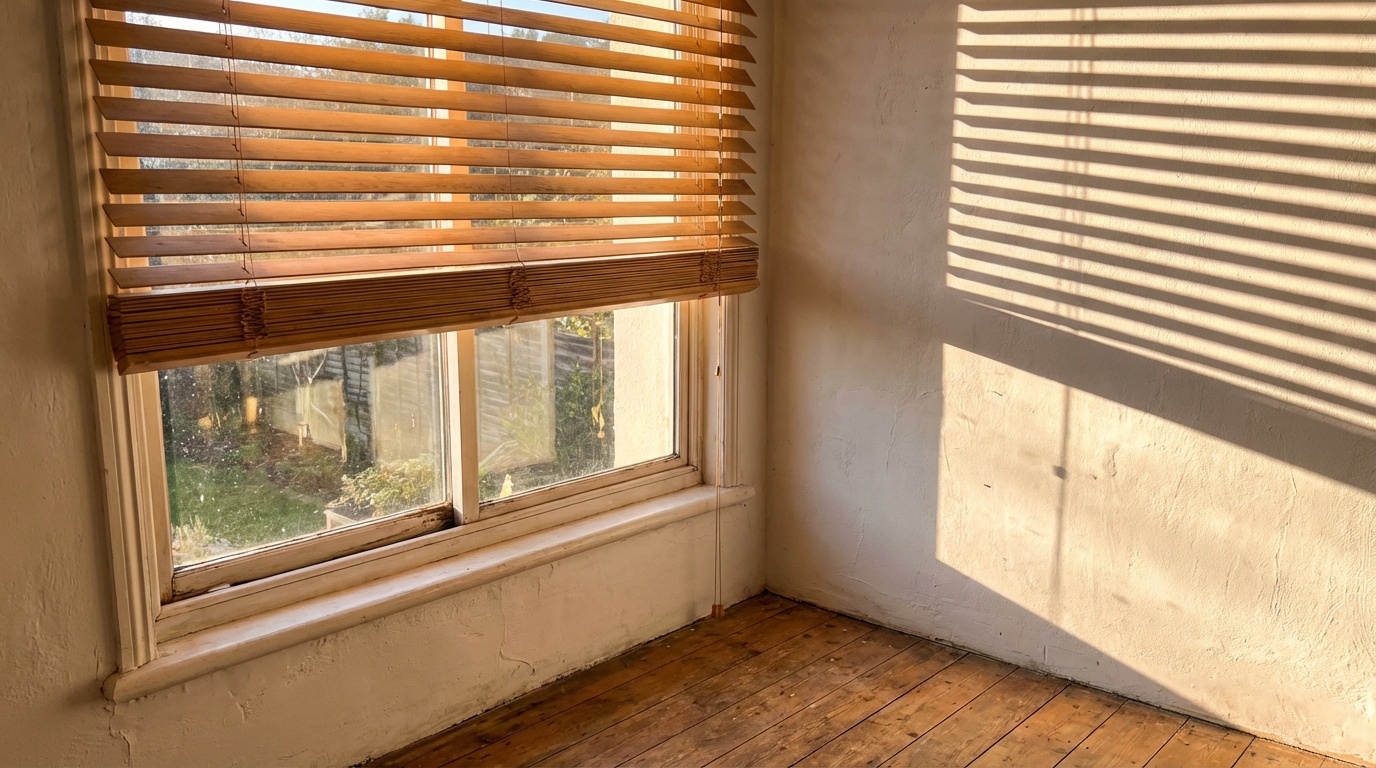
Window Treatments Compared: Blinds vs. Shades vs. Drapes — The Ultimate 2026 Guide
Reading time: 14 minutes
You’ve just moved into a new home, or maybe you’re finally tackling that renovation you’ve been putting off since 2024. You walk into your living room, stare at the bare windows, and suddenly realize: choosing a window treatment is way more complicated than you expected. Blinds? Shades? Drapes? What’s the actual difference — and which one is right for your space?
You’re not alone in feeling overwhelmed. According to a 2025 home décor market report by Grand View Research, the global window treatment industry reached $42.3 billion in 2025 and is projected to grow at a compound annual rate of 4.8% through 2030. That growth reflects just how seriously homeowners, renters, and interior designers are taking this decision.
Well, here’s the straight talk: there is no single “best” window treatment. There’s only the best one for your specific situation — your light needs, your budget, your aesthetic preferences, and yes, your lifestyle. This guide cuts through the noise and gives you a practical, side-by-side breakdown so you can make the decision with confidence.
Table of Contents
- Understanding the Basics: What Are Blinds, Shades, and Drapes?
- Head-to-Head Comparison: The Key Metrics That Matter
- Light Control and Privacy: Who Wins?
- Cost, Installation, and Maintenance Reality Check
- Real-World Scenarios: Which Treatment Fits Your Life?
- 2026 Trends: What’s Hot Right Now
- 3 Common Challenges and How to Overcome Them
- Frequently Asked Questions
- Your Window Treatment Decision Roadmap
Understanding the Basics: What Are Blinds, Shades, and Drapes?
Before diving into comparisons, let’s level-set on what each category actually means. These terms are often used interchangeably in home improvement stores, which only adds to the confusion.
Blinds: The Adjustable Controllers
Blinds are hard window coverings made from rigid slats of wood, faux wood, aluminum, or vinyl. Their defining characteristic is those adjustable slats — you can tilt them to control light direction without fully raising or lowering the blind. The most common types include:
- Venetian blinds — horizontal aluminum or wood slats (the classic office look)
- Vertical blinds — long vertical vanes, ideal for sliding glass doors
- Mini blinds — narrower slats, typically aluminum, budget-friendly
- Wood blinds — warm, natural aesthetic with real or faux wood options
Think of blinds as the precision instruments of the window treatment world. You have granular control over exactly how much light enters and at what angle.
Shades: The Soft Middle Ground
Shades are soft fabric coverings that roll, fold, or stack as they’re raised. Unlike blinds, they don’t have slats — they offer a single panel of varying opacity. Popular types include:
- Roller shades — simple, clean, rolls onto a tube
- Roman shades — fold into neat pleats when raised
- Cellular (honeycomb) shades — energy-efficient, insulating air pockets
- Solar shades — reduce glare while maintaining the view
- Woven wood shades — natural fibers for an organic aesthetic
Shades are the versatile middle child of the window treatment family — softer than blinds, more structured than drapes, and available at virtually every price point.
Drapes: The Statement Makers
Drapes (often called curtains, though technically drapes are lined and more formal) are large fabric panels that hang from a rod at the top of the window. They’re the most traditional option and offer the widest range of style expression. Key varieties include:
- Blackout drapes — lined to block virtually all light
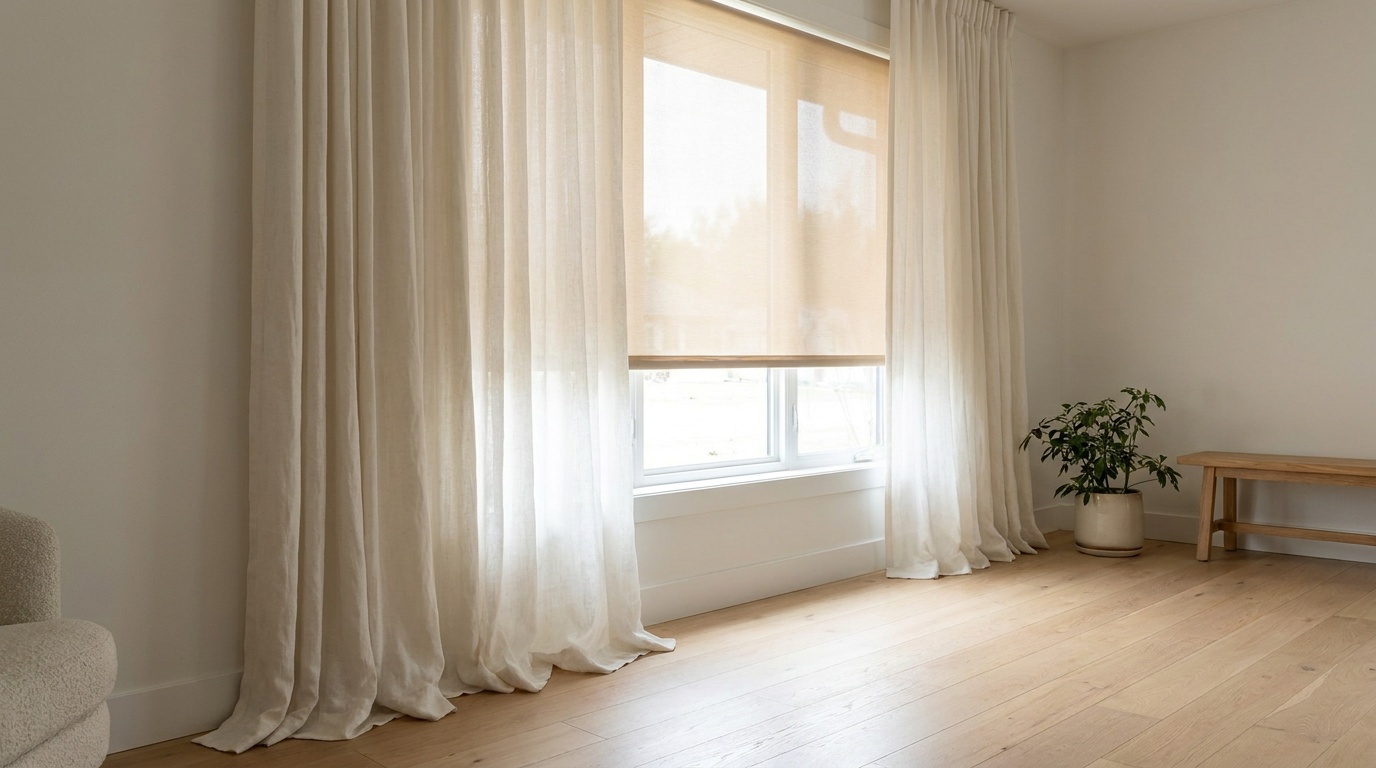
- Sheer drapes — lightweight fabric that diffuses light beautifully
- Linen or cotton drapes — breathable, casual elegance
- Velvet drapes — luxurious, excellent insulation, dramatic effect
If blinds are precision instruments and shades are versatile tools, drapes are the paintbrushes of interior design — they transform a room’s entire mood.
Head-to-Head Comparison: The Key Metrics That Matter
Let’s put all three side by side on the metrics that actually drive purchase decisions in 2026.
| Metric | Blinds | Shades | Drapes |
|---|---|---|---|
| Average Cost Range | $20–$350 per window | $30–$500 per window | $50–$1,500+ per window |
| Light Control Precision | ⭐⭐⭐⭐⭐ Excellent | ⭐⭐⭐⭐ Good | ⭐⭐⭐ Moderate |
| Insulation/Energy Efficiency | ⭐⭐ Low | ⭐⭐⭐⭐ Good (cellular) | ⭐⭐⭐⭐⭐ Excellent |
| Ease of Cleaning | Moderate (dust collects) | Easy to moderate | Requires dry cleaning |
| Smart Home Integration | Available (motorized) | Widely available | Limited options |
Note: Prices reflect 2026 U.S. market averages, sourced from Hunter Douglas, IKEA, and custom treatment providers.
Light Control and Privacy: Who Wins?
This is where most buying decisions live or die. Let’s be honest — the primary job of any window treatment is managing light and protecting your privacy. Everything else is secondary.
Blinds: Unmatched Precision, Minor Compromises
Blinds give you something unique: directional light control. You can tilt the slats upward to bounce light toward the ceiling, creating soft ambient illumination without sacrificing privacy. You can tilt them downward to let in light while blocking the view from street level. This granular control is why blinds dominate in offices, kitchens, and bathrooms.
The caveat? Even when fully closed, most standard blinds leave small gaps between slats. If blackout conditions are your goal — think home theater rooms or shift workers needing daytime sleep — standard blinds fall short. Blackout-lined roller shades or heavy drapes will serve you better.
Shades: The Specialists
Shades have evolved dramatically in the past five years. In 2026, you can choose:
- Sheer shades that glow with filtered daylight while blocking direct visibility
- Blackout roller shades that create near-total darkness (popular among 67% of nursery and bedroom installations, per a 2025 Window Covering Association survey)
- Solar shades with openness factors ranging from 1% (near-blackout) to 14% (light filtering with a clear view)
The game-changer right now is top-down/bottom-up shades, which let you lower from the top to let in ceiling-level light while keeping the lower portion closed for privacy. If you live in a densely populated urban area — a Brooklyn brownstone or a Chicago condo — this feature alone can transform your quality of life.
Drapes: All or Nothing
Drapes are generally an all-or-nothing proposition. Open them for full light and zero privacy; close them for total coverage. Sheer drapes are the exception — they diffuse and soften daylight beautifully while maintaining a degree of modesty during the day. Layering sheers with blackout drapes is a classic designer trick that gives you the best of both worlds.
“The most sophisticated window treatment solutions in 2026 aren’t about choosing one product — they’re about layering treatments strategically to serve different times of day and different moods.” — Jessica Harmon, ASID-certified interior designer, 2025 National Kitchen & Bath Association Conference
Cost, Installation, and Maintenance Reality Check
Budget conversations can be uncomfortable, but let’s have one anyway. Your window treatment costs will depend on three variables: the number of windows, the type you choose, and whether you go custom or ready-made.
The Real Cost Breakdown
A typical U.S. home in 2026 has between 8 and 15 windows. Using mid-range estimates:
- Budget approach (blinds): Aluminum mini blinds from a big-box retailer run $20–$40 per standard window. For a 10-window home, you’re looking at $200–$400 total — very manageable.
- Mid-range approach (cellular shades): Quality cellular shades average $80–$150 per window. That same 10-window home costs $800–$1,500, but you’ll recoup some of that in energy savings.
- Premium approach (custom drapes): Custom-made drapes with professional installation can run $200–$600+ per window. For a 10-window home, you could spend $2,000–$6,000. However, well-made drapes can last 15–20 years.
Pro Tip: Don’t overlook cellular shades as a budget-conscious energy play. The U.S. Department of Energy estimated in 2025 that cellular shades can reduce heat loss through windows by up to 40% — potentially cutting annual heating and cooling costs by $120–$200 for an average home. Over 10 years, that’s real money back in your pocket.
Installation: DIY vs. Professional
Blinds and simple roller shades are genuinely DIY-friendly. Most come with mounting hardware and straightforward instructions; a basic installation takes 15–30 minutes per window. Drapes require accurate measuring, proper rod installation (especially for heavier velvet or lined panels), and an eye for leveling — not complicated, but errors are more visible.
Motorized and smart-home-integrated treatments are best left to professionals. Incorrect wiring or programming can void warranties and create safety issues.
Maintenance Realities
Here’s what nobody tells you in the showroom:
- Aluminum blinds collect dust aggressively on every slat. A 10-blind home can take 45–60 minutes to dust properly.
- Fabric shades can usually be spot-cleaned; some roller shades are fully washable.
- Drapes typically require professional dry cleaning every 2–3 years, which adds $50–$200 per panel to your long-term costs.
Real-World Scenarios: Which Treatment Fits Your Life?
Let’s make this concrete with three scenarios drawn from real homeowner situations.
Scenario 1: The Urban Apartment Dweller
Maria lives on the fourth floor of a Seattle apartment building. Her windows face a busy street and neighboring buildings. She works remotely and needs glare control on her monitor during the day, but she loves natural light and doesn’t want her apartment to feel like a cave.
Best fit: Solar shades or sheer cellular shades. A 3% openness solar shade would dramatically reduce monitor glare while preserving her city view. For the bedroom, she layers blackout roller shades behind sheer curtains for weekend sleep-in flexibility. Total investment for six windows: approximately $600–$900 — practical, stylish, and functional.
Scenario 2: The Family Home with Young Kids
The Nguyen family recently moved into a four-bedroom suburban home in Austin. They have two toddlers, a labrador retriever, and a lifestyle that involves sticky fingers, mud, and chaos. Their priority is durability and easy cleaning, with a moderate budget.
Best fit: Faux wood blinds in living areas, blackout cellular shades in bedrooms. Faux wood blinds are moisture-resistant (critical in bathrooms and kitchens), virtually indestructible, and wipeable with a damp cloth. For the kids’ rooms, blackout cellular shades eliminate the “but it’s still light outside!” bedtime argument. Total investment for 14 windows: approximately $1,200–$1,800.
Scenario 3: The Design-Forward Empty Nester
David and Karen recently downsized to a 1,800-square-foot craftsman home in Portland. Their children are grown, their budget is flexible, and they want their home to feel curated and sophisticated. They love entertaining and want their windows to make a statement.
Best fit: Custom linen drapes with motorized sheers. Floor-to-ceiling linen drapes in a warm flax tone visually elongate their rooms, and motorized sheer panels (integrated with their Google Home setup) allow them to adjust light levels hands-free while hosting dinner parties. Total investment: approximately $4,000–$6,500 — but the result is a home that genuinely looks like it belongs in an architectural magazine.
2026 Trends: What’s Hot Right Now
The window treatment industry isn’t static. Here’s what’s defining the market in 2026:
Smart and Motorized Treatments Are Mainstream
Motorized window treatments were once a luxury reserved for high-end custom homes. By 2026, the price gap has narrowed significantly. Brands like Lutron, Hunter Douglas, and IKEA’s Fyrtur line have brought motorized shades into the $100–$300 per window range for mid-quality options. Integration with Apple HomeKit, Amazon Alexa, and Google Home is now standard. According to a 2025 Houzz Renovation Trends Report, 38% of homeowners who completed window treatment renovations in 2025 included at least one motorized component — up from 21% in 2022.
Sustainability and Natural Materials
Woven wood shades made from bamboo, jute, and grasses are experiencing a significant resurgence. Driven by broader sustainability consciousness, these natural fiber options now account for approximately 18% of shade market sales in North America (Window Covering Association, 2025). They’re not perfect for moisture-prone areas like bathrooms, but for living rooms and bedrooms seeking an organic, biophilic aesthetic, they’re unbeatable.
Dual-Shade Systems
One of the most practical innovations gaining traction in 2026 is the dual-shade system — two independently operable shades on a single headrail. Typically pairing a sheer and a blackout shade, these systems give you complete flexibility without layering multiple hardware installations. They’re particularly popular in master bedrooms, where partners often have different light preferences.
2026 Window Treatment Popularity Index (% of new installations)
31%
26%
22%
14%
7%
Source: Window Covering Association of America, 2025 Annual Market Report
3 Common Challenges and How to Overcome Them
Challenge 1: Getting the Measurements Right
The single most common (and costly) mistake in window treatment purchasing is incorrect measuring. Inside-mount installations require measurements to be taken at three points — top, middle, and bottom of the window frame — because windows are rarely perfectly square. Outside-mount installations offer more flexibility but require careful calculation of overlap to avoid light gaps.
Solution: Most quality retailers (including Hunter Douglas and Budget Blinds) offer free in-home measurement consultations. If you’re going DIY, invest 20 minutes watching a measuring tutorial specific to your treatment type before pulling out the tape measure. Measure twice, order once — because returns on custom treatments are either impossible or expensive.
Challenge 2: Matching Treatments to Architecture
A beautiful set of floor-to-ceiling velvet drapes looks stunning in a Victorian home with 10-foot ceilings. In a mid-century modern home with clerestory windows and clean lines, those same drapes would look disastrously wrong. The challenge is matching treatment style to architectural character.
Solution: Use this quick mental framework. Traditional or transitional architecture (colonial, craftsman, farmhouse) pairs beautifully with Roman shades, wood blinds, and structured drapes. Modern or contemporary architecture (mid-century, industrial, minimalist) sings with roller shades, solar shades, and panel track blinds. Eclectic or bohemian spaces are where woven wood shades and layered curtains thrive.
Challenge 3: Balancing Privacy and Natural Light
This is the fundamental tension in every window treatment decision, and it’s particularly acute in rooms that face neighbors, streets, or other buildings. Many homeowners default to heavy, light-blocking treatments that solve the privacy problem but create a dark, oppressive atmosphere.
Solution: Think in layers and think in zones. For street-facing rooms, a solar shade at 3–5% openness blocks the view into your home during daylight hours (when interior lighting is lower than exterior) while admitting significant natural light. For evening privacy, pair it with a light-filtering roller shade behind. This two-layer approach costs more upfront but delivers dramatically better results than any single treatment can achieve alone.
Frequently Asked Questions
Are blinds or shades better for bedrooms?
For most people, shades are the superior bedroom choice — specifically blackout cellular shades or dual-shade systems combining sheer and blackout panels. They provide more complete light control than standard blinds (which leave slat gaps), offer better insulation for temperature comfort during sleep, and operate more quietly. However, if you strongly prefer the aesthetic of wood blinds and are willing to accept imperfect blackout performance, pairing wood blinds with a blackout curtain panel is a workable compromise.
How do I choose between inside and outside mounting?
Inside mounting — where the treatment fits within the window frame — offers a clean, architectural look that shows off your window trim and keeps the treatment visually contained. It works best when your window frame has at least 2–3 inches of depth for mounting hardware. Outside mounting — where the treatment extends beyond the frame — is ideal for windows with shallow frames, windows that are smaller than ideal (the wider treatment makes them appear larger), or when you want to maximize light blockage by eliminating side gaps. Most designers recommend outside mounting for drapes hung close to the ceiling, which visually adds height to any room.
Can I mix different window treatments in the same home?
Absolutely, and in 2026, mixing treatments by room function is considered a design best practice rather than a decorating faux pas. The key to making it work cohesively is maintaining consistency in one element — either color palette, material warmth (all warm-toned naturals vs. all cool whites and grays), or hardware finish (matching rod and bracket metals throughout). For example: wood blinds in the kitchen, Roman shades in the dining room, cellular shades in bedrooms, and linen drapes in the living room can feel entirely intentional when united by a consistent white/cream color story and brushed brass hardware.
Your Window Treatment Decision Roadmap
You’ve made it through the details — now let’s turn that knowledge into action. The window treatment market in 2026 is richer with options than ever before, and the growing integration of smart home technology means the decisions you make today will connect to how your home operates for the next decade. Here’s how to move forward with clarity:
- Step 1 — Audit your rooms by priority. Start with the spaces where light, privacy, or temperature control is causing you the most friction. Your bedroom and home office are typically the highest-impact starting points.
- Step 2 — Set a realistic total budget before walking into any showroom. Decide what you’d invest across all windows, then allocate more to high-visibility, high-impact rooms and less to secondary spaces like laundry rooms or guest bedrooms.
- Step 3 — Measure every window accurately — even if you’re still just planning. Having your measurements in hand transforms vague browsing into concrete decision-making.
- Step 4 — Request samples before committing. Fabric and material colors look drastically different in artificial store lighting versus the actual light conditions in your home. Most reputable retailers offer free samples; use them.
- Step 5 — Consider smart-home readiness. Even if you’re not ready to invest in motorized treatments today, choosing brands with motorization upgrade paths (like Hunter Douglas’s PowerView system) keeps that door open for 2027 and beyond.
The broader trend driving all of this is the convergence of wellness, sustainability, and smart technology in home design. Window treatments aren’t just décor anymore — they’re part of how we regulate our sleep, manage our energy bills, and connect our homes to intelligent systems. The choice you make at your window is, in a small but real way, a statement about the kind of home you want to live in.
Here’s the question worth sitting with: When you imagine your ideal home — the one that feels calm in the morning, energizing during the day, and cozy at night — what role does natural light play in that vision? Start there, and the right window treatment will follow naturally.
Article reviewed by Tom Schuster, Roofing & Water Damage Rehabilitation Expert, on May 4, 2026